

Vintage Cigars — Aging and Collecting
Published: July 19, 2026
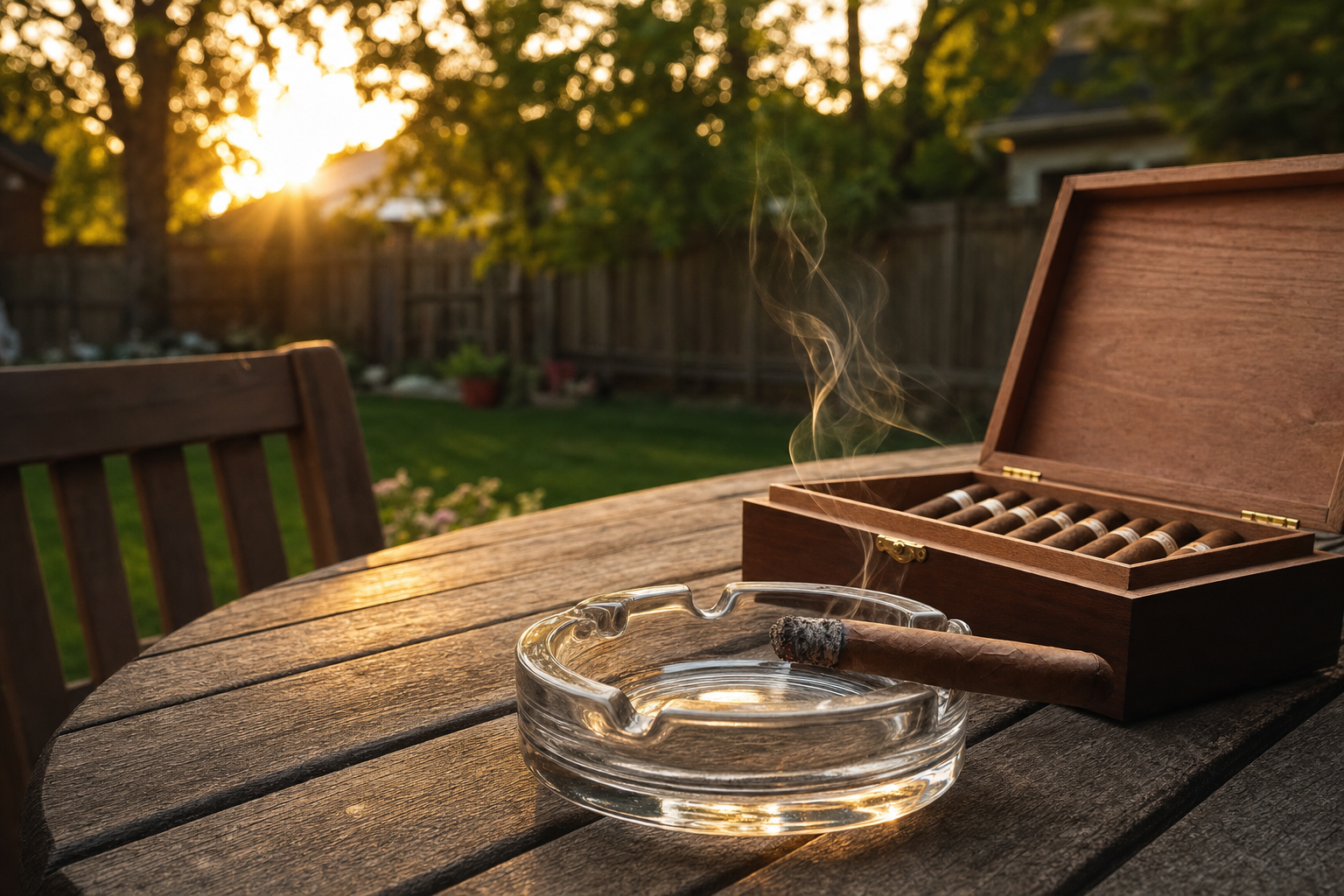
There's a particular kind of quiet that only exists in a backyard on a summer evening after everyone else has gone inside. The sprinklers are done. The neighbor's dog has finally stopped negotiating with the mail carrier. The only sound left is the soft crackle of a cigar being lit and the low hum of a life that, somehow, still has a few surprises left in it. Tonight's surprise is sitting in a cedar box that's been patiently doing nothing for the better part of a decade, and it's about to remind you why patience is the most underrated skill a cigar smoker can develop.
Vintage cigars occupy a strange corner of the hobby. They're part science experiment, part time capsule, and part financial gamble dressed up in cellophane. Ask ten smokers what "aged" means and you'll get ten different answers, ranging from "anything older than my last haircut" to elaborate theories involving humidity charts that look like they belong in a NASA briefing. The truth sits somewhere in the middle, and it's worth unpacking properly — because once you understand what's actually happening inside that wrapper leaf over time, you start looking at your humidor less like a snack drawer and more like a vault.
Why a Cigar Even Bothers to Age in the First Place
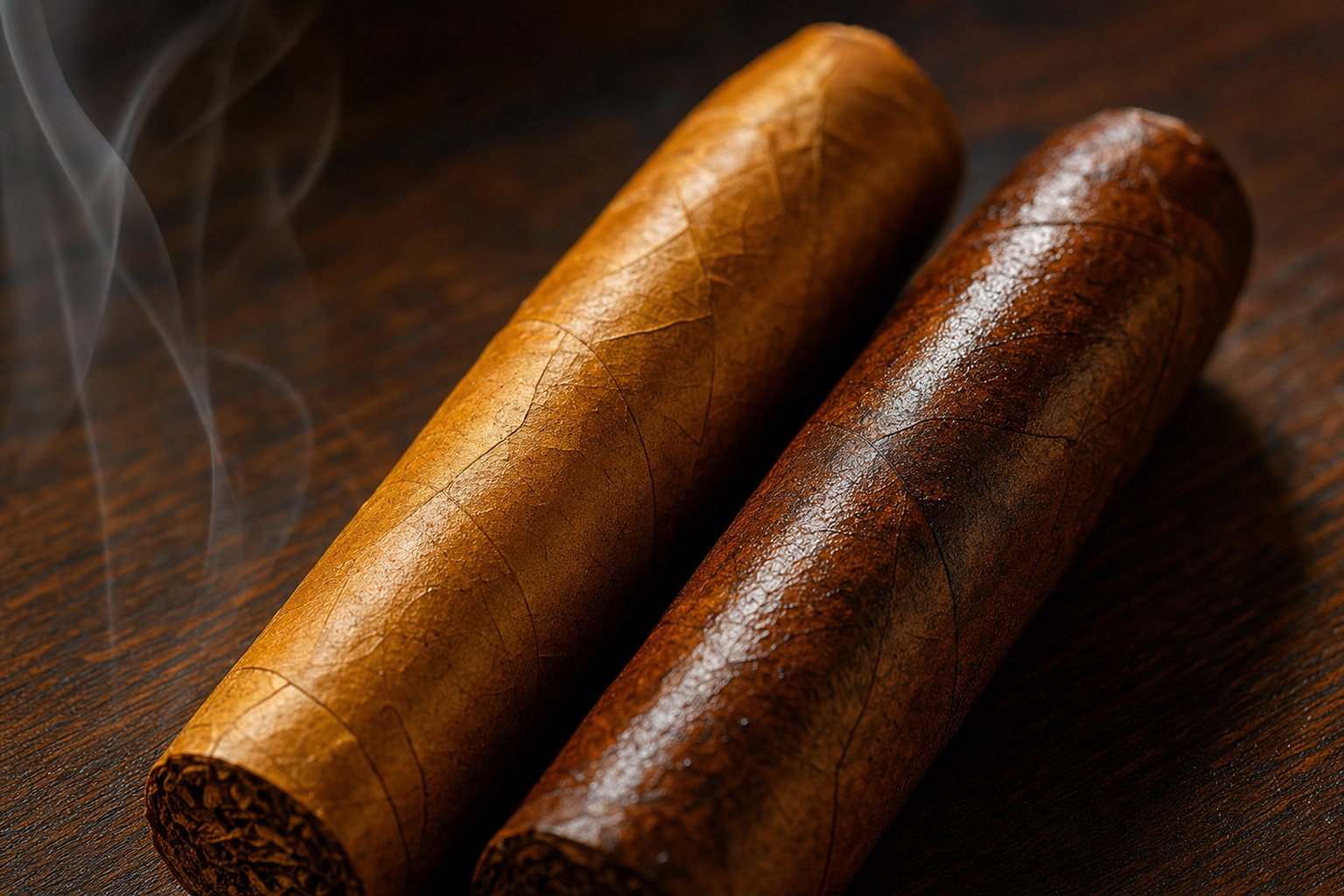
Tobacco is alive in a way that's easy to forget once it's rolled, banded, and sitting in a shop looking dignified. The leaves have been through fermentation already — that's the process where heat, moisture, and naturally occurring microbes break down harsh compounds like ammonia and ferment the leaf into something smokeable. But fermentation before rolling is just the opening act. Once a cigar is finished and boxed, a second, much slower transformation begins, and it never fully stops as long as the cigar is stored somewhere with a pulse of humidity.
Think of it less like leaving bread on the counter and more like what happens to a barrel of bourbon sitting in a rickhouse. Nobody's actively doing anything to it. There's no stirring, no adjusting, no fussing. And yet the contents inside are quietly rearranging themselves at the molecular level, swapping out sharp edges for something rounder. The oils in the tobacco — the same ones responsible for that fresh-cigar aroma you get when you crack open a new box — continue to oxidize slowly over months and years. Volatile compounds that give young tobacco its peppery bite mellow out. Sugars in the leaf caramelize further. The wrapper, filler, and binder, which were fighting each other for dominance in year one, eventually settle into something closer to a negotiated peace treaty.
This is why a five-year-old cigar from a box you forgot you had can smoke like an entirely different stick than the one you bought last month, even though the label says it's the same blend. It's not marketing. It's chemistry, operating at a pace so slow it makes a Sunday afternoon look frantic.
The Flavor Shift Nobody Warns You About
Here's the part that catches a lot of people off guard the first time they try a properly aged cigar next to a fresh one from the same production run: young cigars tend to be loud. Not in the "obnoxious at a barbecue" sense, but in the sense that all the flavors are shouting over each other, each trying to be the main character. Pepper spikes hit early and hard. Some blends taste almost sharp or green, like the tobacco hasn't quite finished making up its mind about what it wants to be.
Give that same cigar three, five, or ten years in proper conditions, and something remarkable happens. The pepper doesn't disappear so much as it steps back and lets other things take the stage — the deep, quiet wood notes, the dried fruit, the leather, the faint cocoa that was always there but got drowned out by the noisier compounds. Aged cigars tend to smoke smoother, with flavors that arrive in a more orderly fashion rather than all at once. It's the difference between a garage band playing at full volume in a small room and a jazz trio that knows when to leave space between notes.
There's also a textural shift that's harder to describe until you've felt it. Young cigars can sometimes have a slight harshness on the retrohale — that back-of-the-throat sensation when you push smoke through your nose. Aged cigars tend to lose that edge almost entirely. The smoke itself feels denser, richer, almost creamier, without necessarily getting stronger in nicotine terms. Strength and richness are not the same thing, and aging tends to affect the latter far more than the former.
Not every blend rewards this kind of patience equally, though. Cigars with a lot of natural oil content and complexity in the tobacco — the kind that already have a lot going on in their youth — tend to age into something genuinely transcendent. Milder, more one-dimensional blends sometimes just get quieter without necessarily getting more interesting. Part of the fun of collecting is figuring out, box by box, which of your cigars are destined for greatness in year eight and which ones were always meant to be smoked within the first year of release. There's no universal formula, and honestly, that unpredictability is half the appeal. If you wanted guaranteed outcomes, you'd have taken up something with instructions.
Storage: Where Good Intentions Go to Die
Let's talk about the single biggest way an aging project gets sabotaged before it ever has a chance to succeed: storage that looks fine on the surface but is quietly working against you the entire time.
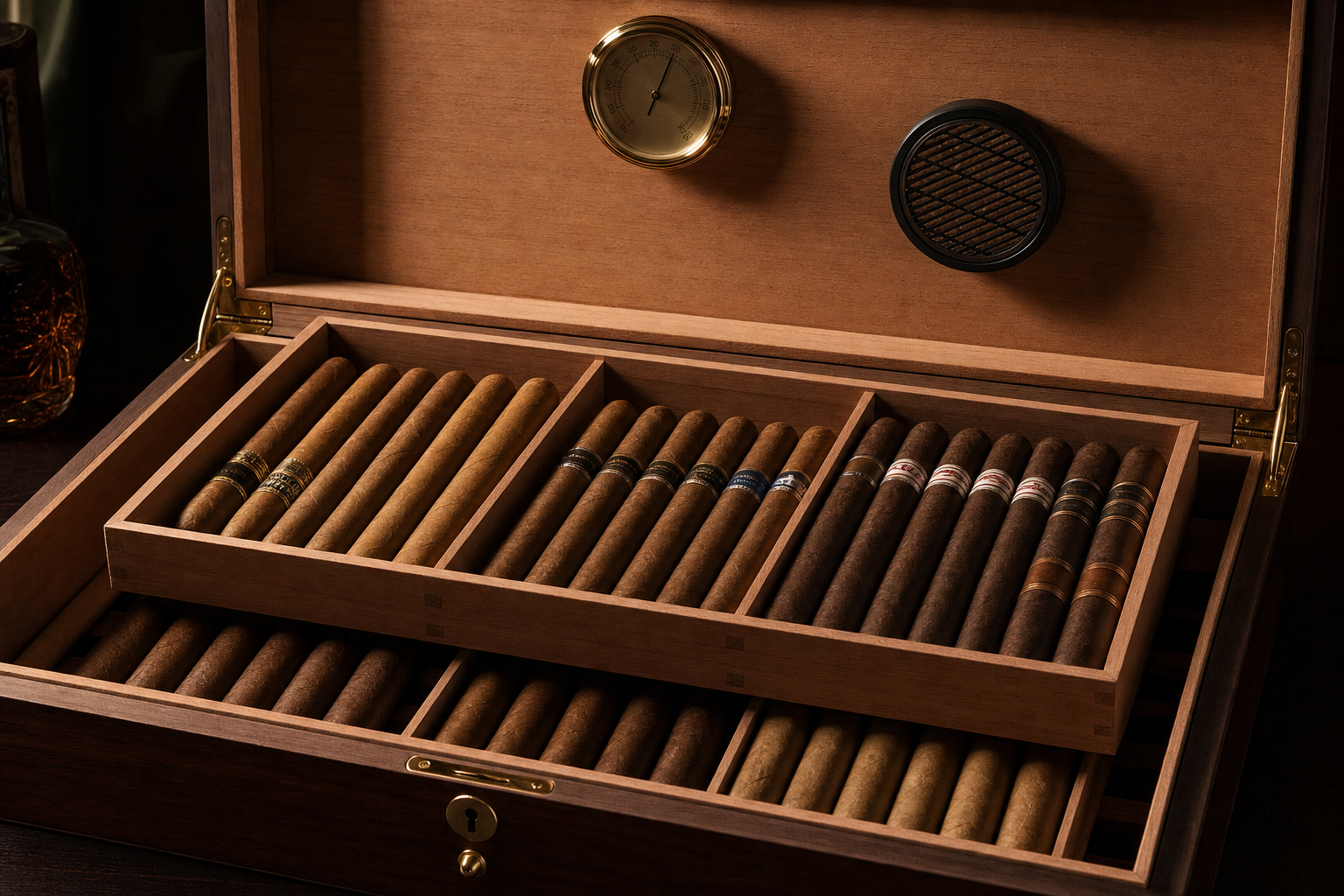
A lot of people assume that once a cigar goes into a humidor, the job is basically done. Close the lid, forget about it, check back in a few years like you're checking on a plant you're pretty sure is still alive. Unfortunately, cigars are far less forgiving than houseplants, and the margin for error is narrower than most people think.
Humidity is the whole ballgame. The generally accepted range for long-term storage sits between 65% and 70% relative humidity, with temperature ideally in the 65-70°F range as well. Go much higher than that and you're rolling out the welcome mat for tobacco beetles and mold, two things that can turn a promising collection into a very expensive compost pile. Go too low, and the aging process essentially stalls — the cigar dries out, the oils stop migrating and developing, and you end up with something brittle that crumbles more than it smokes. Aging requires moisture to keep the chemical reactions moving along; a bone-dry cigar isn't aging gracefully, it's just getting old the way a forgotten newspaper gets old.
Consistency matters more than perfection. A cigar that lives at a rock-steady 68% humidity for five years will almost always outperform one that swings wildly between 60% and 75% depending on the season, even if the average works out to the same number on paper. Fluctuation stresses the wrapper leaf, causes it to expand and contract repeatedly, and can lead to cracking over long stretches of time. If you've ever watched a wood floor buckle after a humid summer followed by a bone-dry winter, you understand the mechanism. Tobacco leaf is doing a quieter version of the same thing.
Temperature swings are the silent threat. Most people fixate on humidity and forget that temperature stability matters just as much for long-term storage. Warmer temperatures speed up the aging process but also increase the risk of tobacco beetle eggs hatching (they're dormant at cooler temps and become active above roughly 72-75°F). A cool, stable environment slows things down slightly but reduces risk dramatically. For anyone serious about holding cigars for a decade or more, a dedicated cooling unit — essentially treating the collection the way a wine collector treats a cellar — stops being an indulgence and starts being basic risk management.
Rotation is not optional. Cigars stored in boxes should be rotated periodically so that the ones on the bottom, which tend to get slightly more humidity exposure, don't age at a dramatically different pace than the ones on top. This is a five-minute task that gets skipped constantly because nobody wants to disturb a project that's sitting quietly and seemingly taking care of itself. Do it anyway. Future you will appreciate the consistency.
Keep flavors separate. Wrapper leaf is remarkably good at absorbing ambient odors, which is a wonderful trait when you're trying to develop complexity and a genuinely unfortunate trait when your cigars are sitting three inches from a box of flavored cigars, a scented candle, or anything else with an aggressive smell profile. Long-term aging projects deserve their own dedicated space, ideally separated by blend or at minimum by strength, so that a bold, spicy cigar doesn't spend the next decade quietly lending its personality to a delicate, mild one sitting next to it.
Original packaging has a purpose. Cedar boxes aren't just presentation — the wood itself interacts with the tobacco over time, contributing subtly to the aging process while also helping regulate humidity at a micro level within the box. Cigars that are aged in their original cedar boxes, sitting inside a properly maintained humidor, tend to develop more evenly than loose cigars tossed into a drawer. If you've broken up a box for whatever reason, cedar trays or spacers are a reasonable substitute, but there's a reason the industry has packaged cigars this way for generations. It's not nostalgia. It's function.
The overarching lesson here is that long-term storage isn't a "set it and forget it" arrangement. It's a low-maintenance but non-negotiable commitment, not unlike owning a pet that never needs walking but will absolutely let you know, eventually and expensively, if you ignore it for too long.
Collectible Cigars: Where Passion Meets Portfolio

Somewhere along the way, cigars stopped being purely a consumable and started becoming, for a certain segment of the hobby, something closer to a collectible asset — discontinued releases, limited production runs, and boxes tied to a specific year or event that will never be made again. This is where the hobby starts to overlap with the same instincts that drive people toward vintage watches or first-edition books: scarcity, provenance, and the simple fact that some things genuinely do get better precisely because they can't be replicated.
Limited releases and anniversary blends are the most obvious entry point. Manufacturers regularly release small-batch cigars to commemorate an anniversary, a specific tobacco harvest, or a one-time blend that will never see production again. These are appealing to collect for the obvious reason that once they're gone, they're gone — no amount of demand will convince a manufacturer to bring back a blend built around a tobacco leaf that no longer exists in the quantities it once did. The value here is partly sentimental, partly financial, and mostly about owning a small, tangible piece of a moment that already passed.
Discontinued blends carry a different kind of weight. When a manufacturer stops producing a particular line — sometimes due to shifting tobacco availability, sometimes due to business decisions that have nothing to do with quality — the remaining boxes in circulation become finite in a very real sense. There's no waiting for the next batch. What's on shelves and in private collections is genuinely all that will ever exist, and that scarcity tends to be reflected both in price and in the almost reverent way collectors talk about them.
Boutique and small-batch producers occupy an increasingly interesting corner of the collectible world. Smaller operations, working with limited tobacco stock and modest production runs, sometimes create blends that develop cult followings precisely because so few people had the chance to try them in the first place. These cigars often reward long-term aging particularly well, since boutique blenders frequently lean into bold, oil-rich tobacco that has plenty of complexity to unpack over the years.
Vintage tobacco harvests matter here too, in the same way vintage years matter to wine collectors. Certain years produce exceptional growing conditions — the right balance of rain, sun, and soil — resulting in leaf that's simply better than what came before or after. Cigars built from tobacco harvested in a standout year often carry that distinction on the band or the box, and collectors who know their history will seek those specific years out deliberately rather than just grabbing whatever's on the shelf.
Provenance and storage history increasingly matter to serious collectors, much the way they do in any collectible market. A box that's been sitting in a climate-stable, professionally maintained environment for a decade is worth meaningfully more — in both flavor and market terms — than an identical box that's been bouncing between a garage in summer and a closet in winter. If you're ever buying aged cigars secondhand, asking about storage conditions isn't being difficult. It's being informed.
It's worth being honest about something here, though: collecting cigars purely as a financial instrument is a much shakier proposition than collecting them because you genuinely love the hobby and want a stash of interesting, evolving smokes to explore over the years. Cigars are perishable in a way that watches and books are not. They can be ruined by a single bad humidity swing, a beetle infestation, or simple neglect. The market for reselling aged cigars, while real, is nowhere near as liquid or established as markets for other collectibles. Treat the appreciation in flavor and rarity as the primary reward, and treat any potential financial upside as a pleasant bonus rather than the point of the exercise. The moment collecting becomes purely transactional is usually the moment it stops being fun, and fun was the entire reason anyone got into this in the first place.
Building an Aging Project Without Losing Your Mind
If all of this has you eyeing your humidor with newfound ambition, a few practical suggestions for actually doing this well rather than just talking about it at the next gathering:
Buy in boxes, not singles, when you're planning to age something. Singles are great for trying a blend, but a proper aging project benefits from having enough quantity to sample along the way — one at the one-year mark, one at three years, one at five — without depleting your entire stash just to satisfy curiosity. Buying a single cigar to age is a bit like buying one puzzle piece and hoping the picture develops on its own.
Label everything with the purchase date, not just the blend name. Six years from now, "some Nicaraguan thing I picked up" will not help you remember anything useful. A simple label with the date of purchase (and ideally the box code, if you're feeling thorough) turns your humidor from a mystery box into an actual reference library.
Start with blends known to age well, rather than experimenting blindly on everything. Full-bodied, oil-rich cigars with a track record of aging gracefully are a safer bet for a first long-term project than delicate, mild blends that may simply fade rather than deepen. Ask around, read up, and lean on the collective experience of people who've already run this experiment before you.
Resist the urge to check in constantly. Opening the box every other week to "see how it's doing" doesn't actually tell you anything meaningful and just exposes the cigars to unnecessary humidity fluctuation every time the lid comes off. Aging rewards genuine patience, not performative patience where you check in obsessively and call it discipline.
Accept that some experiments won't work out, and that's a completely normal part of the process rather than a personal failure. Not every blend improves with age. Some peak early and plateau. Some simply don't have enough going on to develop further complexity. This isn't a referendum on your judgment as a smoker — it's just how a genuinely organic, unpredictable product behaves over time.
The Actual Point of All This
At the end of the day, none of this — the humidity charts, the rotation schedules, the hunting down of a discontinued blend from a production run that ended before some readers were even smoking cigars — matters if it isn't in service of an evening exactly like the one this article opened with. Quiet backyard, cooling air, a cigar that's been patiently becoming something better than it started as, and absolutely nowhere else you need to be.
Aging and collecting cigars is, in the end, a slow-motion argument against instant gratification, made by people who've generally spent a lot of their lives surrounded by things designed to be used up quickly and replaced. There's something quietly satisfying about tending to something that can't be rushed, that punishes impatience and rewards attentiveness, and that eventually hands you back a genuinely better version of what you started with — assuming you didn't leave the lid open too long or forget where you put the hygrometer.
So light one up tonight. Maybe it's something young and loud, full of pepper and ambition. Or maybe, if you've been doing this right, it's something that's been sitting quietly for years, waiting for exactly this kind of evening to finally show you what it's been working on the whole time.
Either way, the backyard's not going anywhere, and neither is that box in the humidor. That's rather the whole point.
Enjoyed this one? Come hang out with us where the conversation never really stops. Follow along on Instagram and Facebook and be sure to check out Beyond the Humidor and Brown's Life for more.
