Understanding the Anatomy of a Cigar: A Comprehensive Guide to Wrapper, Binder, Filler, Size, and the Art of Smoking
(Published March 29, 2026)

In the world of fine indulgences, few things rival the complexity and craftsmanship of a premium cigar. More than just rolled tobacco, a cigar is a meticulously crafted product, a symphony of flavors and aromas orchestrated by the careful selection and blending of different tobacco varieties. Whether you're a curious newcomer or a seasoned aficionado, understanding the anatomy of a cigar – its fundamental components and how they interact with size, shape, and smoking technique – is key to unlocking a deeper appreciation for this centuries-old tradition.
Think of it like this: it's Sunday, March 22nd, 2026. You've got the day off, the sun is shining, and you're ready to relax. Why not elevate the experience with a truly exceptional cigar? But before you light up, let's delve into the intricate world of cigar construction. This comprehensive guide will explore how the wrapper, binder, and filler work together to create flavor and influence burn characteristics, examine the relationship between cigar dimensions and smoking experience, identify the most common mistakes that derail new smokers, and provide actionable insights grounded in both traditional cigar-making expertise and modern market trends that have shaped the global cigar industry into a multi-billion-dollar sector experiencing robust growth and increasing diversification across all consumer demographics.
The Three Pillars of Premium Cigar Construction: Wrapper, Binder, and Filler
Every premium cigar contains three essential components that work in concert to deliver the complete smoking experience. Understanding the distinct role of each component is fundamental to grasping why cigars are constructed the way they are and how variation in any one element fundamentally alters what you experience when you smoke. The blend of a cigar—the specific combination of wrapper, binder, and filler leaves—is analogous to a recipe in cooking, where master blenders carefully select and proportion different tobaccos to achieve precise flavor profiles and smoking characteristics. Just as a recipe's success depends on the quality and balance of every ingredient, a cigar's excellence emerges from the thoughtful selection and arrangement of all three components working together seamlessly.
The Wrapper: The Face of the Cigar and a Flavor Powerhouse
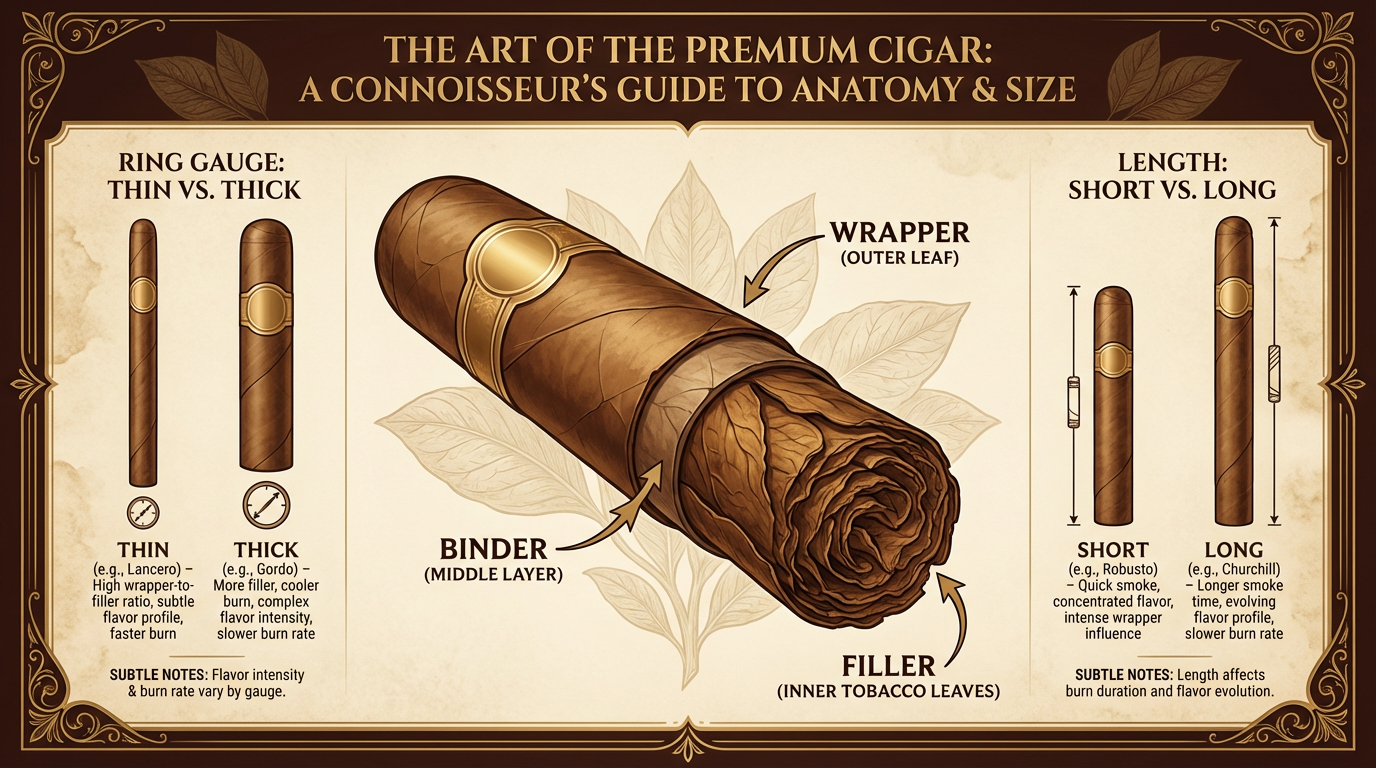
The cigar wrapper leaf serves as the outer layer of the cigar and represents far more than mere aesthetics, despite its obvious visual prominence when you examine a cigar before lighting it. Wrapper selection receives extraordinary attention from cigar manufacturers because it contributes disproportionately to the overall smoking experience, with some experts suggesting that the wrapper accounts for anywhere between sixty to eighty percent of the flavor you perceive when smoking a cigar. This remarkable influence explains why wrapper leaves are among the most expensive components of premium cigars and why they undergo some of the longest fermentation and aging processes before being used in production.
The wrapper must satisfy multiple demanding criteria simultaneously. It must be visually pristine, with no blemishes, heavy veins, or inconsistent coloration, since the wrapper is the first thing consumers see and touches their lips during the smoking experience. Beyond aesthetics, wrapper leaves must possess physical integrity, flexibility, and elasticity that allows them to be rolled smoothly around the cigar binder and filler without cracking or tearing. The wrapper also influences how evenly a cigar burns, serving as the primary control mechanism for consistent combustion from the foot to the final portion of the smoke.
Wrappers vary considerably in color, texture, thickness, and origin, and these variations have profound implications for flavor. The two broadest categories for classifying wrappers are Natural wrappers, which are lighter in appearance, and Maduro wrappers, which are significantly darker. However, this distinction involves more than mere color; it reflects fundamental differences in how the tobacco was processed and fermented. Natural wrappers, which undergo shorter fermentation periods, typically deliver milder flavor profiles characterized by creaminess and nuttiness. In contrast, Maduro wrappers, which undergo extended fermentation and sometimes warmer aging, develop darker coloration and produce richer, sweeter, more complex flavor profiles that create a fuller-bodied smoking experience.
Beyond the Natural-Maduro dichotomy, numerous specific wrapper varietals are cultivated in different regions, each contributing distinctive characteristics to cigars. Connecticut wrappers, harvested in the Connecticut River Valley under shade cloth or nylon mesh to block direct sunlight, deliver a golden-brown color with smooth, creamy flavors and refined characteristics. Connecticut Broadleaf wrappers, grown in the same region but processed as Maduro, offer nearly black coloration and work exceptionally well in darker cigars. Habano wrappers, originally from Cuba but now cultivated in Nicaragua and Ecuador, produce darker, more intense experiences with earthy spices, leather, wood, and coffee notes. Corojo wrappers, also with Cuban origins but now primarily grown in Honduras, deliver pepper and spice with slightly darker coloration than Connecticut varieties. Cameroon wrappers, grown in African nations of Cameroon and the Central African Republic, contribute their own distinct flavor profiles. Ecuadorian wrappers, particularly those grown in the Los Ríos province near the foothills of the Andes, develop leathery and spicy characteristics or—when using Sumatra seed varieties—deliver notes of espresso bean, leather, and earth.
The wrapper's contribution to flavor extends beyond inherent taste notes and encompasses the entire smoking dynamic. Wrapper thickness affects how the smoke cools as it passes over your palate, influencing whether a cigar delivers a sharp, intense flavor experience or a smoother, more measured one. The natural oils present in wrapper leaves determine burning characteristics; wrapper leaves with sufficient natural oils burn more slowly and evenly, while drier wrappers may burn faster and hotter. This explains why premium cigars receive such meticulous attention to wrapper selection and why factory workers spend considerable time color-sorting cigars after rolling to ensure every cigar in a box displays consistent wrapper shading.
The Binder: The Unsung Structural Hero and Combustion Coordinator
While wrapper and filler leaves receive more attention and acclaim from cigar enthusiasts, the cigar binder tobacco—called the capote in Spanish blending terminology, a term derived from the bullfighter's cape that "controls" the bull much as the binder controls the filler —plays a role equally critical to the cigar's success, though its importance is often underappreciated by smokers who cannot see it in the finished product. The binder is the tobacco leaf (or sometimes two leaves) that wraps around and holds together the cigar filler tobacco, creating the structural foundation that allows the wrapper to be applied smoothly. Think of the binder as the backbone or the mortar to which the filler provides the bricks and the wrapper provides the decorative wallpaper.
The binder fulfills multiple essential functions beyond mere structural support. It maintains consistent density within the cigar, which directly determines whether you experience a cooler, looser draw or a slower-burning, firmer pull. The binder must ensure even combustion throughout the entire cigar, a responsibility that demands leaves with sufficient thickness and structural integrity to withstand the construction process, the mold pressing, and ultimately the heat of combustion. Additionally, the binder must blend well with both the wrapper and filler tobaccos to benefit the overall flavor profile, contributing complementary notes rather than clashing with the chosen blend.
Binder leaves are typically sourced from the middle sections of the tobacco plant, leaving them with different characteristics than wrapper or premium filler leaves. These leaves tend to be thicker and more elastic than wrappers, which enables them to hold fillers in place and survive the rigorous processing that occurs during mold pressing and cigar rolling. The color, flavor, and strength of binder leaves from the middle portions of the plant are generally lighter than those from the upper portions, making them ideal for their structural role. Many cigar makers occasionally use binder leaves that did not meet aesthetic requirements for wrapper use, a practical solution that maximizes resource efficiency while maintaining quality standards.
Regarding flavor contribution, binder leaves lack the intensity of wrapper and filler leaves, primarily because they receive less sunlight exposure and undergo shorter curing and aging than their counterparts. However, this reduced flavor impact does not diminish their importance; rather, it reflects their specialized role in the construction hierarchy. What binder leaves contribute significantly is aroma—the smell that you perceive from the smoke after lighting the cigar. This aroma component substantially influences how you experience the cigar, as much of what we interpret as taste actually comes from our olfactory senses perceiving aromatic compounds. Expert blenders like Ernesto Perez-Carrillo emphasize that the binder's ability to blend well with the wrapper is absolutely crucial; if the wrapper and binder do not harmonize, the entire blend suffers regardless of the quality of other components, and the difference between an "okay" cigar and a memorable one often hinges on this critical relationship.
The construction of binder leaves involves specific techniques designed to protect their delicate structure. During curing, rather than being sewn together with thick thread (as lower-quality leaves sometimes are), premium binder leaves are hung on smooth, thick wooden sticks called cujes, with one leaf hanging on each side. This careful handling protects the leaves from developing holes or cracks that would compromise their ability to hold fillers together and produce an even burn. Binder leaves from the lower primings are typically cured for one to two years, while higher priming leaves receive additional aging time to develop optimal characteristics.
The Filler: The Complex Flavor Foundation and Strength Determiner
Positioned at the heart of the cigar beneath the binder layer, the cigar filler tobacco comprises the bulk of the cigar and serves as the primary determinant of the smoke's strength, flavor complexity, and body. The filler is a carefully orchestrated blend of different tobacco leaves, often combining leaves from multiple regions and crop years to create the nuanced flavor profile that distinguishes one cigar blend from another. Master blenders consider the filler as their primary creative medium, the component where they exercise maximum artistic control in crafting distinctive smoking experiences.
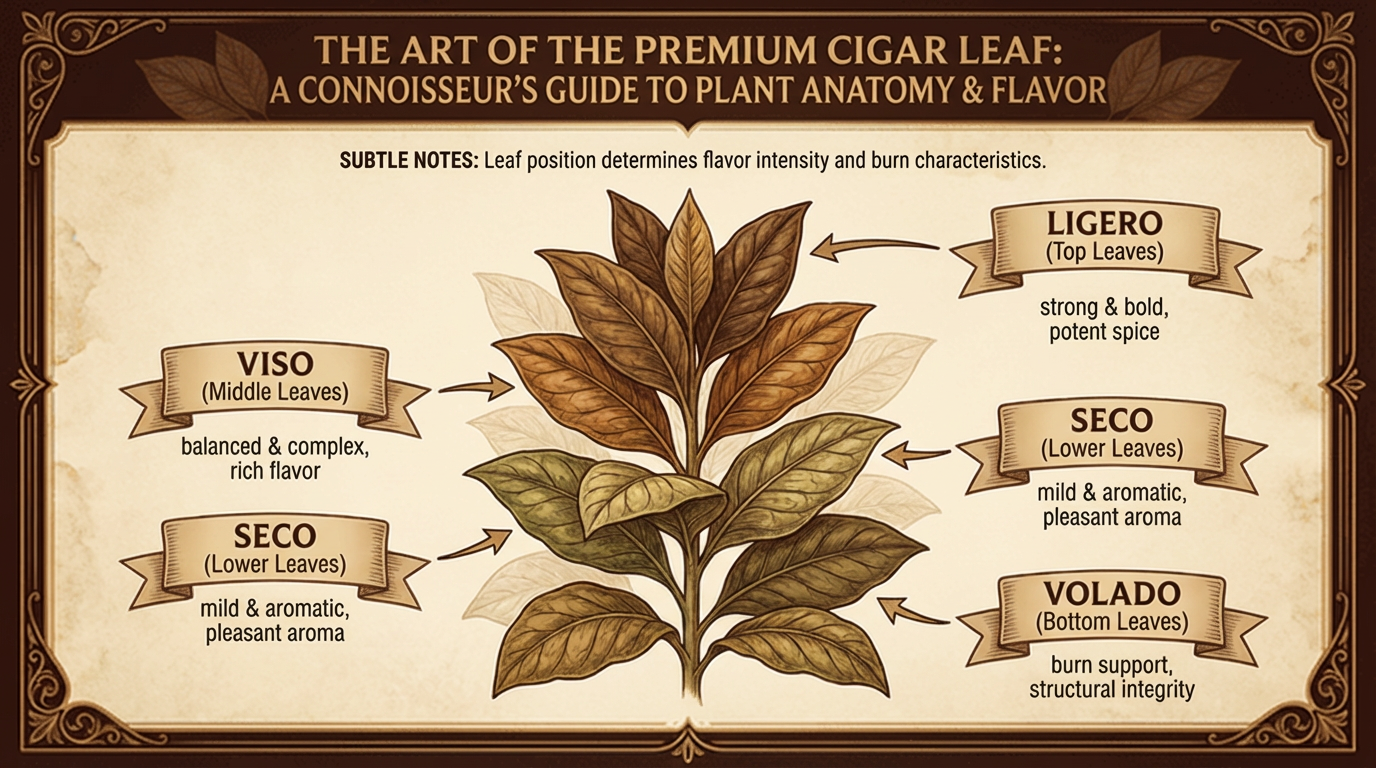
Filler tobacco is categorized by its position on the tobacco plant, which directly correlates to its flavor intensity, nicotine content, and burning characteristics. Ligero represents the top leaf of the tobacco plant and possesses very strong flavor characteristics because it receives maximum direct sunlight and accumulates nicotine sent upward from the plant's roots. Ligero leaves also spend more time on the plant than lower leaves, developing additional complexity and strength that makes them the primary flavor driver in full-bodied cigars. Viso (also called Visus) leaves occupy the middle section of the plant and deliver medium strength with the most complex flavor profiles of all tobacco leaves, offering balanced characteristics that contribute sophistication to medium-strength cigars. Seco leaves are positioned on the lower portion of the plant and produce milder flavors with excellent burning characteristics and are primarily responsible for the pleasant aroma that contributes substantially to the cigar smoking experience. Volado (or low-priming Seco) represents the lowest leaves on the plant and is characterized by thin, delicate structure that burns easily, serving a critical function in keeping surrounding leaves burning evenly.
The specific balance of these different leaf types determines the overall profile of the finished cigar. Mild-flavored cigars typically combine Seco leaves with modest amounts of Viso, creating accessible experiences for newer smokers. Medium-flavored cigars employ a more balanced mix of Seco and Viso, often with small additions of Ligero to provide some intensity without overwhelming. Full-bodied, bold cigars incorporate substantial amounts of Ligero, which provides the power and complexity that experienced smokers seek.
Beyond these priming categories, filler tobacco is further classified as either long filler or short filler. Long filler, known as tripa in Spanish, consists of whole tobacco leaves that run the length of the cigar and are the hallmark of premium, handmade cigars. Short filler, also known as picadura or chop, consists of chopped tobacco scraps and is primarily used in machine-made cigars. The distinction between long and short filler has tremendous practical implications; long filler burns significantly slower and cooler than short filler, which burns faster and hotter due to the increased surface area created by the chopped pieces. This explains why premium handmade cigars with long filler are universally considered superior to machine-made alternatives for those seeking a refined smoking experience.
The actual placement of different filler leaves within the cigar matters tremendously. Proper cigar construction places the thickest, most dense tobacco leaves (the Ligero leaves) toward the center of the cigar, while thinner, more delicate leaves (like Volado) are positioned around the outside. If this arrangement is neglected and thicker leaves are not packed into the middle, the cigar will burn unevenly, creating frustrating hot spots and uneven combustion that compromise the experience.
Cigar Sizes, Shapes, and Ring Gauges: How Dimensions Affect Your Smoking Experience

Cigars are measured according to two primary dimensions: length (given in inches) and ring gauge, which describes the cigar's diameter expressed in 64ths of an inch. Understanding these measurements and how they interact with one another is crucial because size directly influences burning time, intensity, flavor concentration, and the relative contribution of each component to your overall experience.
Understanding Ring Gauge and Its Influence on Flavor
Ring gauge represents perhaps the most misunderstood dimension in cigar sizing, yet it exerts profound influence on how you experience a cigar's flavor profile. A cigar's ring gauge is measured in 64ths of an inch, so a 42 ring gauge cigar measures 42/64ths of an inch in diameter, approximately 0.65 inches or 16.7 millimeters. A 50 ring gauge cigar measures 50/64ths of an inch, approximately 0.78 inches or 19.8 millimeters. The importance of ring gauge extends far beyond simple measurement; it fundamentally determines the ratio between binder, filler, and wrapper tobaccos in the finished cigar, and this ratio has profound implications for flavor intensity and which component dominates the tasting experience.
In thinner cigars with lower ring gauges like the Lancero (typically 38 ring gauge) or Corona (typically 42-44 ring gauge), the proportion of wrapper leaf relative to interior filler and binder is substantially higher. This means that in a thin cigar, you are smoking more wrapper leaf and less of the interior components that provide body and secondary flavor notes. Consequently, the wrapper's influence on the tasting experience becomes even more pronounced in thin cigars; a thin cigar magnifies the wrapper's character and may deliver a more intense flavor experience because less interior tobacco dilutes the wrapper's contribution. This explains why experienced smokers often choose thinner ring gauges when they want to experience the true flavor profile of a new blend, as they know that thin cigars minimize the "masking" effect of filler and binder tobaccos.
Conversely, in thicker cigars with higher ring gauges like the Gordo (typically 60+ ring gauge) or Robusto (typically 48-52 ring gauge), the absolute volume of filler and binder tobacco increases substantially while the wrapper's relative proportion decreases. In these thicker cigars, the wrapper's influence on the overall tasting experience becomes diluted; the additional volume of interior tobaccos creates complexity and body that moderate the wrapper's intensity. This relationship explains why Lanceros are said to magnify the wrapper's flavor while Gordos diminish it—it is a mathematical consequence of the changing ratio of components.
This principle has profound practical implications. When comparing the same blend rolled in different ring gauges—such as Oliva Serie V available in both a 7-by-38 Lancero and a 6-by-60 Double Toro—you will notice distinctly different tasting notes and intensity levels. The Lancero delivers a more concentrated, wrapper-forward experience, while the Double Toro provides a richer, more complex profile where the filler and binder contributions become more prominent. Understanding this dynamic allows you to deliberately select cigar sizes and shapes based on what aspect of a blend you wish to emphasize.
Cigar Length and Its Effects on Intensity and Burn Time
While ring gauge determines diameter and the ratio of components, cigar length directly influences two other critical variables: how long the cigar will burn and how quickly the heat reaches your palate. A Corona (typically 5.5 inches with 42-44 ring gauge) burns for approximately thirty to forty-five minutes, while a Robusto (typically 4.75-5.5 inches with 48-52 ring gauge) burns for approximately forty to fifty minutes, and a Churchill (typically 7 inches with 47 ring gauge) or larger can burn for well over an hour.
Beyond simple burn time, cigar length affects how the heat trajectory develops during smoking. When you light a shorter cigar, the lit end is positioned much closer to your palate, meaning the heat reaches your mouth more quickly and intensely. This proximity creates a more concentrated flavor experience; the heat accelerates the release of aromatic compounds and the perception of intensity increases accordingly. Longer cigars place the lit end further from your mouth, meaning the heat travels a greater distance before reaching your palate, resulting in a cooler, slower-developing flavor experience. This explains why the same blend in different lengths delivers measurably different experiences—the Ashton Cabinet #8 (7 x 49) Churchill and the Ashton Cabinet Tres Petite (4.375 x 42) are blended from the same Dominican tobaccos, but the Tres Petite delivers much more intensity and expediency of flavor development due to the shorter length bringing heat closer to your mouth.
Parejo Versus Figurado Shapes: Straight Sides Versus Creative Contours
Cigars fall into two broad shape categories: Parejos and Figurados. Parejos are traditional cigars with flat, consistent ring gauge from head to foot, featuring bodies that are cylindrical with straight sides throughout.