

Tobacco Farming: From Seed to Leaf
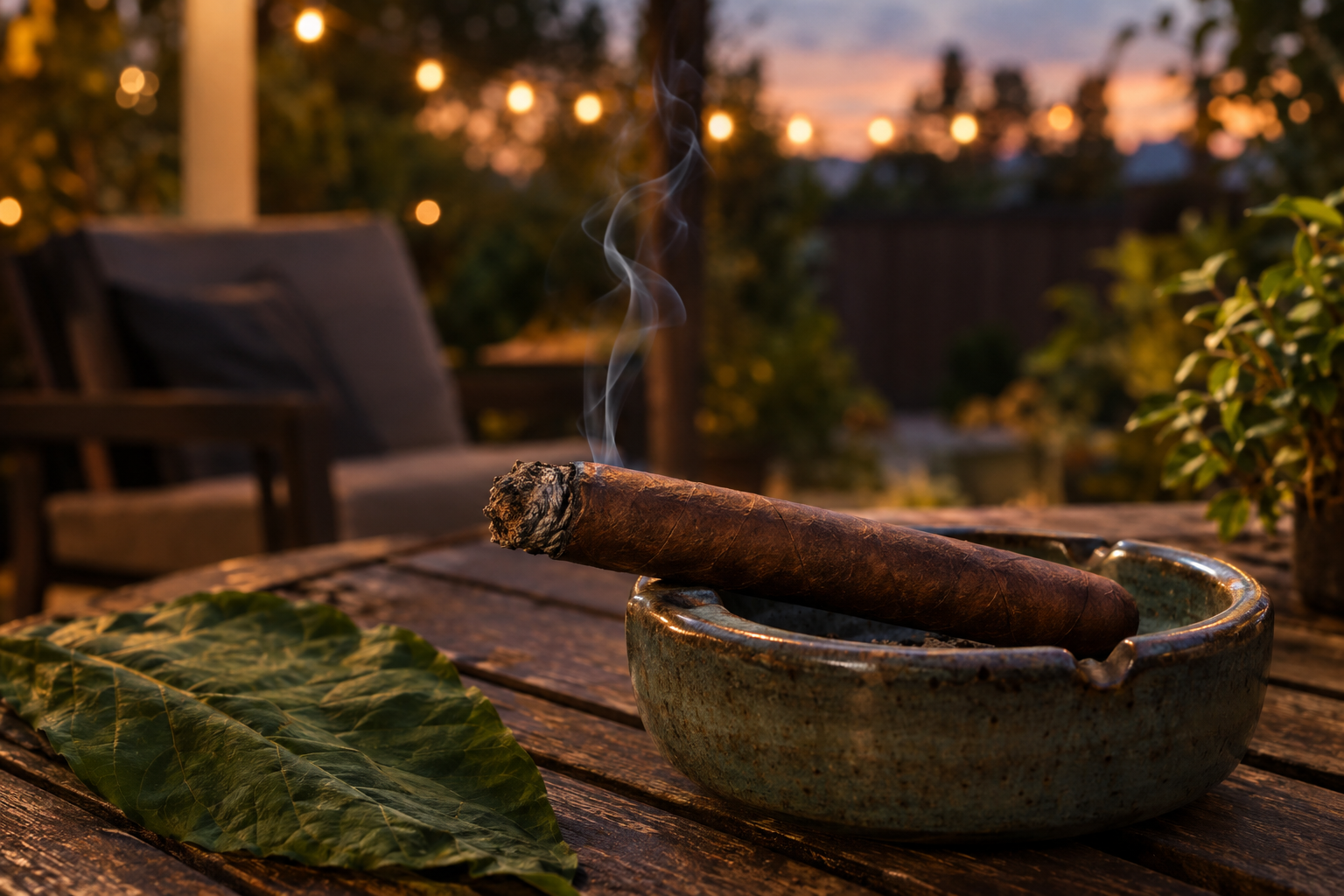
It's a quiet evening. The sprinkler timer has finished its sad little hiccup cycle, and the neighbor's dog has made peace with the universe for the night. You're settled into your favorite chair in the back corner of the yard, the spot we'll call The Oasis. A cigar rests between your fingers, and you're doing the thing that makes the hobby worth it. You're not looking at a phone. You're not looking at anything, really.
Tonight's official reason for being out here is that you're "verifying the structural integrity of the patio umbrella." Nobody asked. Nobody ever asks. But a good cover story is part of the ritual, and a person needs a reason to be sitting in the dark with a small ember, wearing a sweatshirt from a concert tour that ended before the invention of the smartphone.
Here's a question you may never have asked yourself while the smoke curls up into the porch light. Where did this thing come from?
I don't mean the shop or the box. I mean the actual, dirt-under-the-fingernails origin. Before the band, before the cap, before the wrapper was rolled snug around the filler, this was a plant. A plant that started as a speck, smaller than the period at the end of this sentence, and went through months of fussing, worrying, drying, sweating, and waiting before it ended up in your hand.
So pull your chair a little closer to the ashtray. We're going to walk the whole path together, from seed to leaf, and by the time the ash drops you'll never look at your evening smoke the same way.
The Seed: Small Enough to Lose in a Sneeze
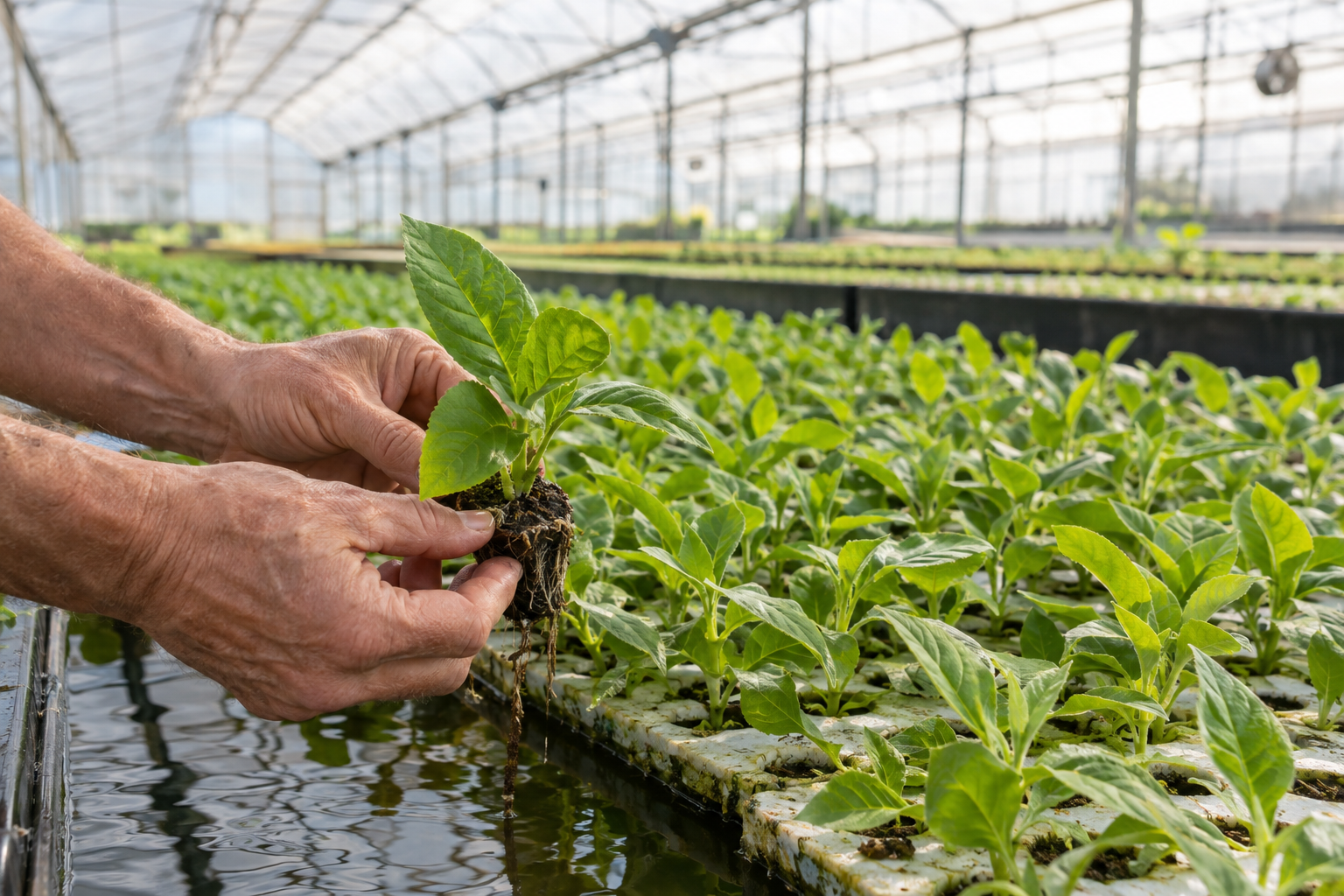
Start with the humbling part. A tobacco seed is tiny. A single gram can hold well over ten thousand of them, which means a teaspoon of seed could, in theory, plant an enormous acreage. They look like ground pepper, if the pepper were a little dusty and a little sad.
Because they're so small, you can't just scatter them in a field and hope. Wind would take them. A light rain would bury them. A suspicious sparrow would treat them as a free sample. Growers solve this by starting the seeds in a protected nursery, historically a prepared seedbed under cover and today more often a tray system that floats on shallow water in a greenhouse. The seeds get warmth, moisture, and a calm environment, the agricultural equivalent of a very good spa.
Think of it as the plant's early childhood. For the first six to eight weeks, the seedlings get the VIP treatment. They're watched constantly, kept out of harsh weather, and trimmed back so they grow strong and uniform. Growers will often clip the tops of the young plants, a practice that toughens them up and keeps them even. It's a bit like the buzz cut your parents gave you before school pictures. It doesn't look glamorous, but it works.
Then comes graduation. The seedlings, now roughly the size of a hand, are transplanted into the field. This is the moment the whole operation gets real. A farm crew, or a machine pulled behind a tractor, sets thousands upon thousands of baby plants into rows. It's backbreaking, precise, and timed to the weather like a heist. Plant too early and a late chill can ruin everything. Plant too late and you miss the window the leaf needs to mature.
If you've ever tried to coordinate a group outing among friends who all have jobs and kids and unresolved opinions, you understand the scheduling challenge. Now imagine the group is fifty thousand plants and the venue is controlled by the sky.
Growing Season: A Plant With Opinions
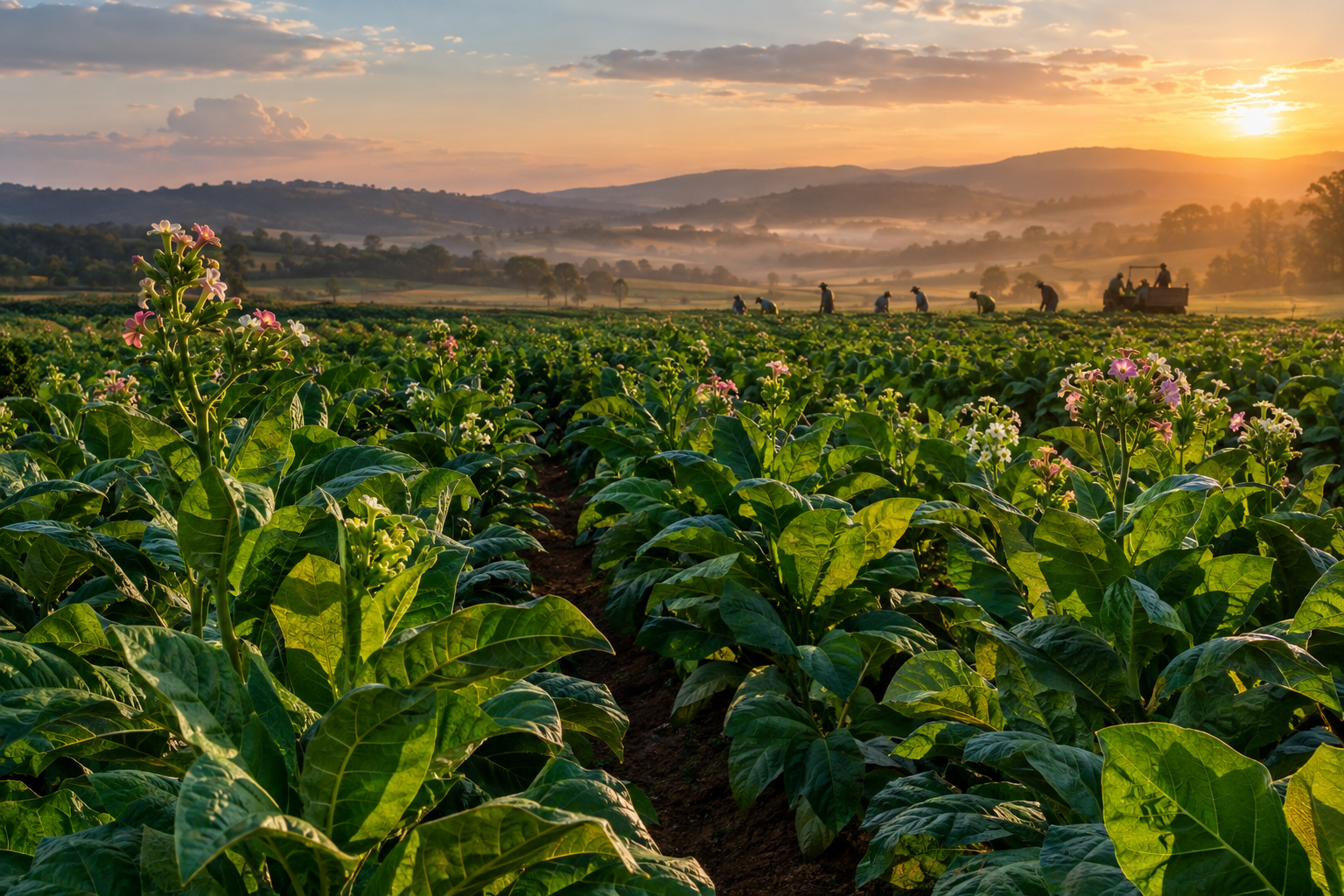
Once the seedlings are in the ground, the plant does what plants do. It reaches, drinks, and grows with shocking speed. A healthy tobacco plant can shoot up to several feet over a couple of months. Its leaves widen into big, floppy, almost tropical paddles that look like they belong in a botanical garden or a retro motel lobby.
This is also when the farm turns into a never-ending to-do list.
The plant wants water, but not too much. It wants nutrients, but not an overload. It wants sun, but sometimes only the filtered kind. It has pests: worms, beetles, and other tiny freeloaders with a taste for the leaf. It has diseases: molds, mildews, and viruses that ride in on anything. And it has a flower, which is the one thing the grower usually doesn't want.
Here's why. When a tobacco plant is ready to bloom, it sends up a tall stalk topped with pretty clusters of pink or white flowers. Pretty, yes. But all the energy the plant spends on blooming and making seed is energy it isn't spending on thickening and developing the leaves. So growers snap off the flowering top, a step called topping, before it can bloom. The plant, deprived of its big reproductive moment, funnels everything into the leaves and becomes richer and stronger.
There's a catch. When you top a plant, it responds by sprouting little side shoots, called suckers, in the joints where leaf meets stem. Those have to be removed too, or they steal resources. So the crew goes through the field again and again, snapping and pulling. It's like cleaning out the garage while someone keeps bringing in more boxes.
All of this labor happens in heat, sun, and humidity. Whenever you hear someone complain that a cigar costs too much, I'd gently suggest they spend one afternoon in a tobacco field in midsummer. They'll start rounding up.
Varietal Significance: Not All Leaves Are Created Equal
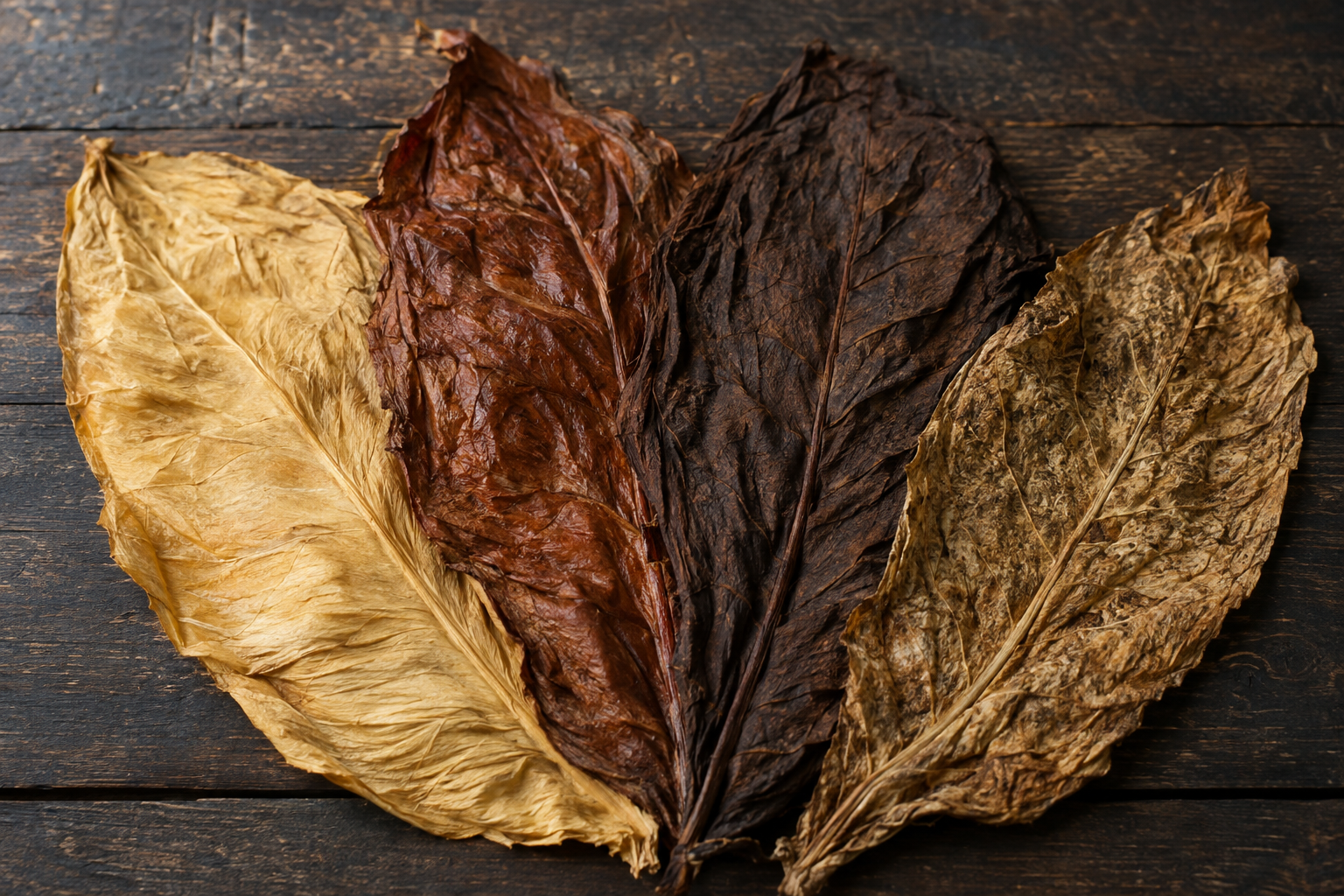
Let's talk about the genetics, because this is where a cigar's personality begins.
Most of what we smoke comes from one species, but within that species lives a huge family of varieties, each bred or selected over generations for specific traits. These varietals are like the different instruments in a band. A bass guitar and a trumpet are both musical, but you're not going to substitute one for the other and expect the same song.
Some well-known families and what they're known for:
Connecticut Shade. This is the classic mild wrapper. Grown in a famously temperate region, and also in other places using the same seed lines, it produces a thin, silky, golden-tan leaf with a gentle, creamy character. If you like a cigar that whispers rather than shouts, this is probably your lane. The seed has been cultivated so long that people treat it as heritage property.
Connecticut Broadleaf. Different plant, different job. This is a thicker, darker, rougher leaf, often fermented heavily and used for wrappers that deliver sweetness and a deep, almost chocolatey earthiness. It looks rugged, with a lot of tooth and character.
Habano. Seed with roots in the Cuban lineage, now grown in several countries. Habano wrappers tend to have more spice and richness, with a reddish-brown color and a bolder personality. If your idea of a good time is a little pepper and a lot of presence, you're probably already familiar.
Corojo. A Cuban-origin seed with a long reputation for beautiful, oily wrappers and a complex, spicy profile. Original lines became scarce, so what we see today are often descendants and hybrids. Growers have spent decades selecting and crossing to recover or improve those qualities.
Criollo. Another heritage seed, long used in filler and wrapper alike. Criollo has a reputation for balance and aromatic richness, often a smoother, more rounded flavor.
Cameroon. Leaf from a seed associated with West Africa, with a toothy, slightly bumpy appearance and a distinctive sweet-and-spicy note, often described with words like toasted and woody.
Sumatra-type. Tends to deliver a slightly sweet, subtly spiced flavor, with a leaf that's thin and elastic and a hue that ranges from light to medium brown.
Piloto Cubano and Olor. These are filler workhorses. Piloto brings structure and a hearty backbone; Olor is aromatic, adding fragrance and complexity. They're two of the unsung heroes that rarely get a name on the band, but you taste them every time.
Why does this matter? Because a varietal isn't just a label. It's a blueprint. It determines how thick the leaf grows, how oily it looks, how much sugar and nicotine it can develop, how it will burn, and what flavors are likely to emerge. Choose the wrong varietal for a goal and you can't fix it later with technique.
There's also a quiet drama in this story. Seed lines get hybridized, adapted, and sometimes lost. A grower who finds a version that thrives in a particular valley holds onto it with a grip you'd normally see on someone clutching the last parking spot at the mall during the holidays. Over generations, a "Cuban-seed" tobacco grown in Nicaragua or the Dominican Republic stops being exactly what it was and becomes its own thing. It's the same story you've lived with your old band's setlist: the song stays, but it sounds different depending on who plays it and where.
In the field, varietals also behave differently. Some resist disease better. Some produce more leaves per plant. Some thrive under shade cloth. Some hate it. A good grower treats each varietal like a houseguest with specific demands: this one needs more water, that one runs hot and needs shade, and this other one refuses to speak to you until July.
And then there's blending. A master blender doesn't pick one varietal and call it a day. They combine leaves from different seeds, different priming levels, and sometimes different countries, building a profile like a mixing engineer working a board with a hundred tiny sliders. The varietal is the raw material. The blend is the finished record.
Priming and Harvest: Leaf by Leaf, Like Peeling a Very Valuable Onion
Here's something that surprises people: tobacco isn't harvested all at once like wheat. In the case of premium cigar leaf, it's usually picked a few leaves at a time, from the bottom of the plant up, over several weeks. This is called priming.
The leaves at the bottom of the plant ripen first. They're closest to the ground, get the least direct sun, and tend to be lighter in flavor and strength. Called volado, they're prized for their excellent burn properties. They're the gentle foundation of a blend.
The middle leaves, called seco, are the balance. Moderate strength, good aroma, and a pleasant richness. These are often the heart of the filler.
The top leaves, called ligero, get the most sun and are the most intense. They're strong, oily, and slow to burn, packed with flavor and power. A little goes a long way, like a hot sauce nobody should be pouring freehand.
The crew moves down the rows with a sharp eye, picking only the leaves that have reached the right stage of ripeness, the color shifting from deep green to a slightly yellowed hue. Pick too early and the leaf is raw and underdeveloped. Pick too late and it can become brittle or lose quality. The decision gets made by sight, touch, and generations of accumulated instinct.
The harvested leaves are then gathered, handled carefully, and carried toward the next stage. Handle a wrapper leaf roughly and you'll leave bruises and tears. These leaves are thin and delicate, and the folks tending them handle them with the gentleness of someone carrying a full-to-the-brim cup of coffee through a crowded room.
Curing: The Barn, the Breeze, and the Long Patient Fade
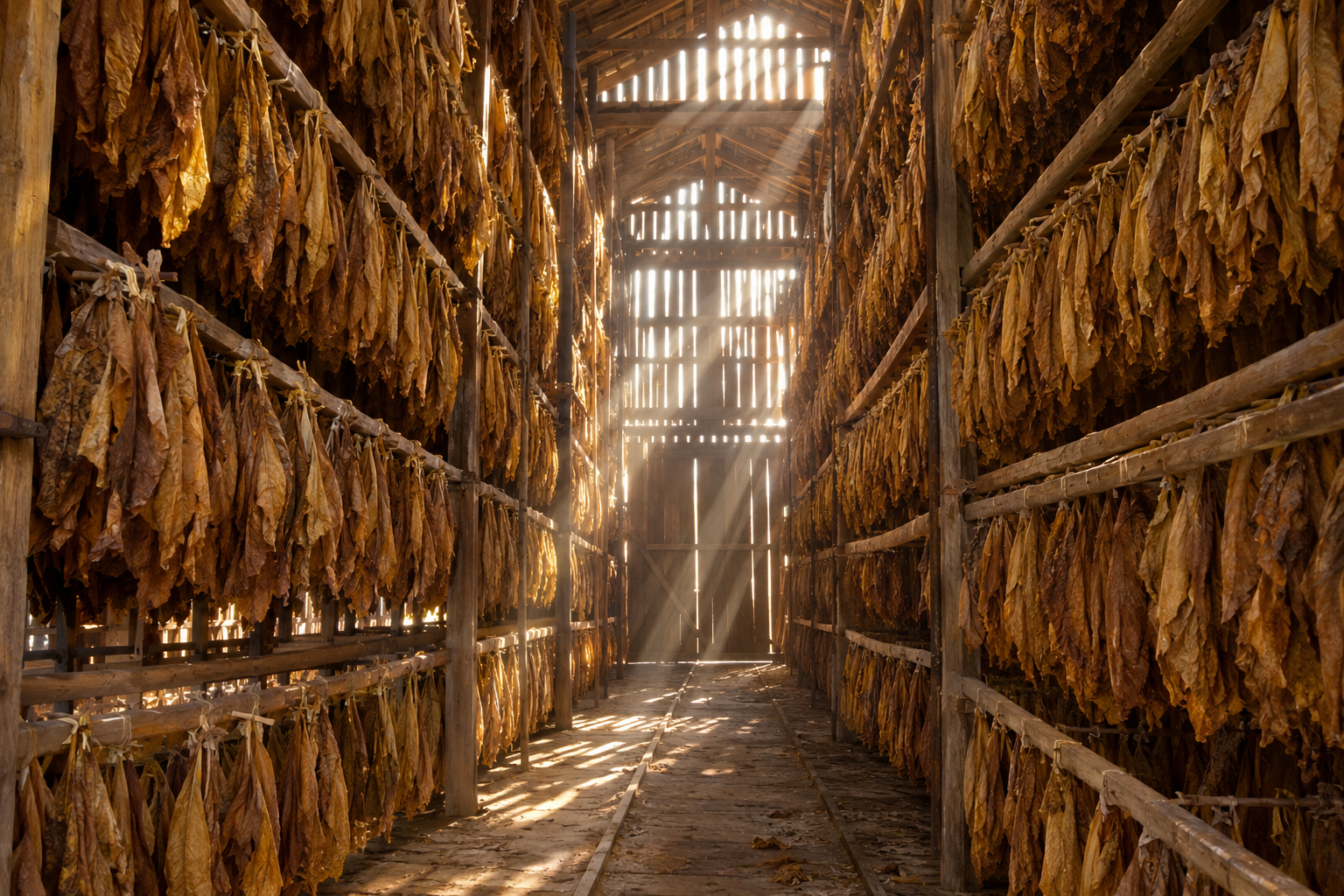
Now we reach one of the most underrated phases in the whole story. Fresh-picked tobacco leaf is green, wet, and, frankly, not very pleasant. It's loaded with water, chlorophyll, and a lot of raw chemistry that would taste harsh and vegetal if you tried to smoke it. Curing is the process that transforms it.
For most cigar tobacco, the method is air curing. The leaves are strung or tied in pairs and hung from long wooden poles, called rails, inside tall, airy barns. These barns are designed with vents, doors, and sometimes adjustable panels so the grower can manage airflow and humidity. Walk into a curing barn and you'll see row upon row of leaves hanging like laundry in a very tall, very fragrant attic.
Over several weeks, usually somewhere from a month to two months depending on the type, the leaf goes through a color shift. It fades from green to yellow, then to a warm, rich brown. Chlorophyll breaks down. Sugars, starches, and other compounds begin to change. The leaf loses a huge portion of its moisture, but not too quickly, because drying too fast locks in green flavors and creates a harsh product.
The grower's job in the barn is essentially to play weather referee. Humid, still day? Open the vents wider to move air. Dry, windy stretch? Close things down so the leaf doesn't crisp up like a potato chip. Sometimes the barn is deliberately kept humid, and sometimes a small amount of heat is used to nudge things along. It's an exercise in patience and intuition, and the barn can't be rushed any more than a teenager can be rushed out of a bathroom.
Different tobaccos get different curing treatments:
Air curing is the standard for most cigar leaf and is the gentlest approach.
Fire curing uses smoldering wood fires within the barn and imparts a smoky quality. It's less common for premium cigars but does show up in certain styles.
Flue curing uses heat piped through the barn without direct smoke contact, and it's far more common in cigarette tobaccos than in cigar leaf.
Sun curing lays leaf out in the open sun, and is seen in some regional or traditional tobaccos.
For our purposes, air curing is the main event. And while it may sound like a passive stage, it's anything but. During curing, the leaf is a living, changing chemical lab. If a barn gets too hot, the leaf can "house burn" and turn dark and spoiled. If it gets too wet, mold gets a free dinner. If it dries too fast, the leaf locks in flavors that will be harsh forever. The room for error is thin, and the grower who can read a barn the way a seasoned mechanic reads an engine noise holds a real treasure of knowledge.
By the end of curing, the leaf has dried to a stable, golden-to-brown state. It's lighter, more aromatic, and starting to resemble something you'd recognize. But it's still not ready. It's like a rough demo recording. The song is there, but it hasn't been mixed.
Fermentation: The Slow Sweat That Makes the Magic
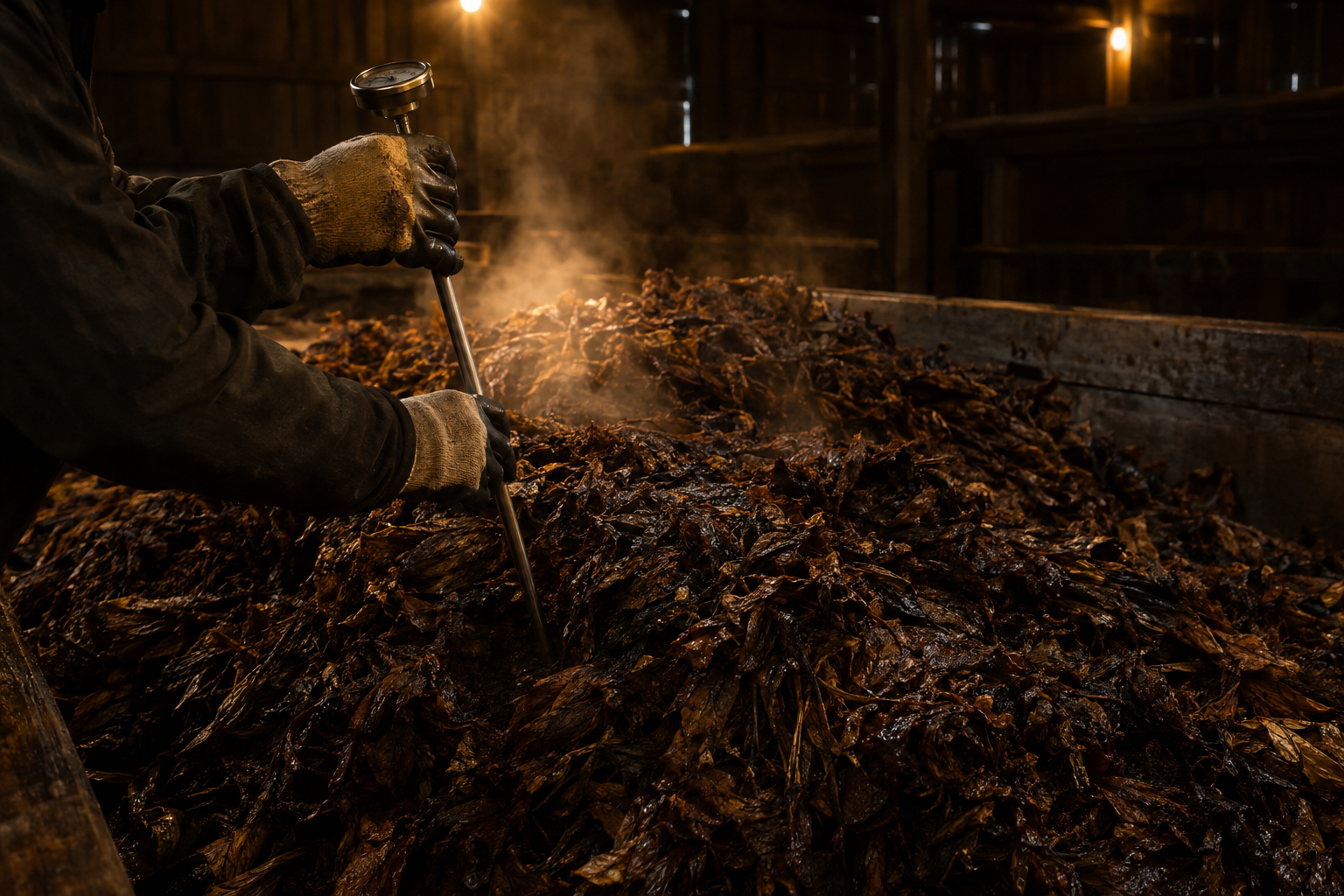
If curing is the quiet fade, fermentation is the dramatic second act. And it doesn't involve what you probably imagine. There's no yeast, no bubbling vat. In tobacco, "fermentation" is really a process of controlled, natural heat and chemical change that happens when moisture-conditioned leaves are stacked together in large piles.
Here's how it generally goes. After curing, leaves are rehydrated to a specific moisture level, sorted by type and size, and stacked into big heaps called bulks, or pilónes. These piles can be several feet tall and wide. Inside, the leaves begin to heat up on their own through the activity of enzymes and microbial processes. The pile warms from the center, reaching temperatures that can climb well into the triple digits Fahrenheit.
That heat does a lot of work:
It breaks down ammonia compounds, reducing the sharp, harsh, nose-wrinkling quality that raw leaf can carry.
It lowers some of the nicotine and other bitter components, smoothing the experience.
It transforms residual sugars and other compounds, deepening flavor and aroma.
It darkens and evens out the leaf color.
But here's the tricky part. You can't just leave the pile alone. If the center gets too hot, the leaf can be damaged or ruined. So the crew has to monitor it constantly with thermometers pushed into the pile, and when it reaches a target temperature, they take the whole thing apart and rebuild it, moving the cooler outer leaves to the center and the hot inner leaves to the outside. This is called turning the pile. Imagine rotating a mattress, except the mattress is an enormous, hot, fragrant heap of priceless leaf and the mattress is also trying to burn itself down.
Each turn leads to another heating cycle, which will usually be a little less intense than the last. The process repeats, sometimes for weeks or months, until the pile no longer heats meaningfully. Heavier, thicker leaves, such as ligero, often need longer and hotter fermentation than the delicate wrappers, which receive a gentler, shorter treatment to avoid damaging their fine structure.
This stage is where a lot of the "smoothness" people talk about is born. A properly fermented leaf burns cleaner, tastes rounder, and smells richer. A poorly fermented one can taste sharp, sour, or even chemical. And it's one of the places where cheaper production tends to cut corners, because time is money and a leaf sitting in a pile isn't generating revenue.
After fermentation, many leaves go through additional aging. They're sorted, packed into bales or barrels, and stored for months or years. Aging allows flavors to marry, rough edges to soften, and residual moisture to equalize. It's the point where the leaf stops being a raw ingredient and starts becoming a finished voice.
So the next time a cigar tastes exceptionally smooth, give a quiet nod of respect to the pile that sweated its way through a long, hot summer on your behalf.
Terroir: The Dirt Has Opinions Too
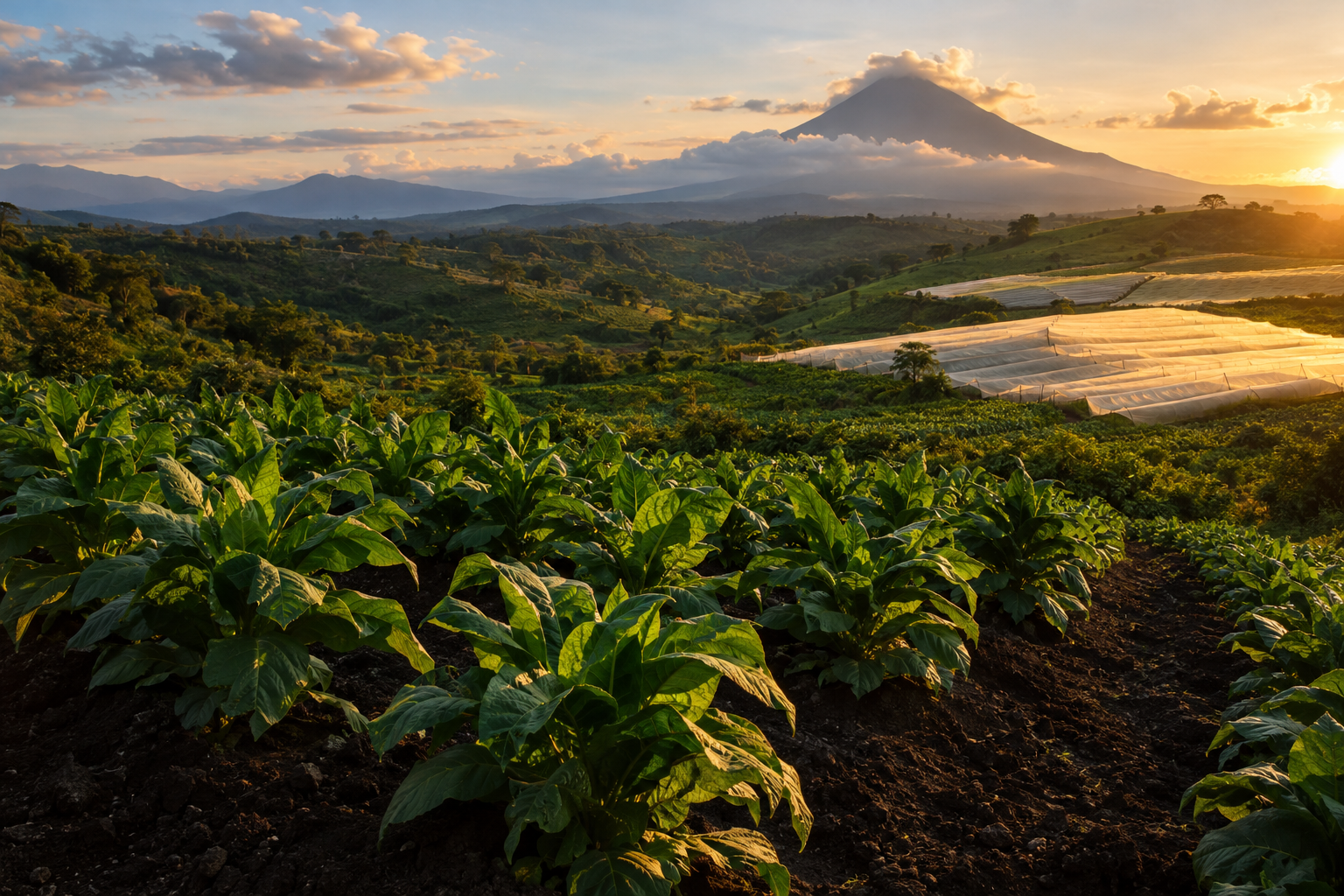
All right, let's get to the part that makes wine people insufferable and makes tobacco people absolutely correct. Terroir.
Terroir is the idea that a plant's flavor is shaped by where it grows: the soil, the climate, the elevation, the rainfall, the sunlight, even the microclimate of a single hillside. It's why the same seed planted in two different valleys can produce two totally different leaves. The plant doesn't just live in the place. It absorbs the place.
Let's break down the major influences.
Soil. Soil composition affects everything, including nutrient uptake, drainage, water retention, and mineral content. Sandy soils drain fast and often produce lighter, milder leaf. Clay-rich soils hold water and nutrients, and often yield a heartier, more robust plant. Volcanic soils, rich in minerals, are celebrated in several regions for producing leaf with deep, spicy, full-bodied flavor. A plant growing in rich volcanic earth is effectively eating a different diet than its cousin in a sandy plain, and the leaf shows it.
Climate. Temperature, humidity, and rainfall patterns determine how fast a plant grows, how thick the leaf becomes, and how oils and sugars develop. Hot, sunny conditions push toward thicker, stronger leaf. Cooler, cloudier conditions tend to produce thinner, more delicate leaf. A long, steady, moderate growing season can give a leaf lovely complexity, while a wild, erratic one can cause stress that shows up in the flavor.
Sunlight and shade. Some of the world's finest wrappers are grown under huge canopies of cheesecloth-like fabric that diffuses the sun, shielding the plants from harsh rays and creating a gentle, humid microclimate. This method yields large, thin, supple, uniform leaves with a delicate flavor. Meanwhile, tobacco grown in full sun, such as much of the filler leaf, develops thicker texture and stronger, more concentrated flavors. In some regions, natural cloud cover does the same work as artificial shade.
Elevation and topography. Plants on a hillside experience different drainage, temperature swings, and sun exposure than those in a flat valley bottom. Even small variations across a single farm can create distinct flavor profiles, which is why serious growers talk about individual fields the way sommeliers talk about individual vineyard blocks.
Regional character. Different cigar-growing regions have earned reputations for their qualities. One famous Caribbean region is celebrated for a particular combination of soil and climate that has long been considered the gold standard for premium leaf. A highland area in Central America is known for producing rich, peppery, powerful tobacco. A broad Caribbean valley is respected for its consistency and its mild-to-medium leaf that blends beautifully. A river valley up north is famous for wrapper leaf grown under shade. Other regions in Central America, Ecuador, Mexico, Brazil, and beyond have each built their own identity, shaped by their own dirt and weather.
An important caution: terroir isn't a magic word. It doesn't mean one place is automatically better than another. It means each place produces something distinct, and a great blender uses that distinctness to build a more interesting whole. A cigar made with leaf from several regions is a bit like a well-curated mix tape. Each track comes from a different artist, and the sequence is what makes it work.
Also worth noting: terroir changes over time. Soil gets depleted, so growers rotate crops, restore nutrients, and let fields rest. Climate shifts. A bad season, a drought, a flood, or a hurricane can alter the leaf from year to year, which is why vintages matter in the cigar world just as they do in wine. A grower who tries to produce an identical leaf every year is chasing a ghost. The better approach is to understand the land and let the blender compensate for what the season delivers.
Sorting, Rolling, and the Journey to Your Chair
After fermentation and aging, the leaf heads to the factory, where another round of careful work begins. The leaves get sorted by size, color, texture, and quality. The best, most uniform leaves become wrappers. Leaves with good burn and structure become binders. Leaves rich in flavor and character go into the filler. A single cigar might have three or four different leaf types inside it, each doing a specific job.
Then comes the roller, someone whose hands have done the same motion tens of thousands of times. They layer the filler leaves, wrap them in the binder, and finish with the wrapper, smoothing and shaping as they go. A skilled roller can feel a cigar's construction through their palms the way a good carpenter feels whether a joint is true.
After rolling, the cigars are boxed and rested, often in aging rooms, so the flavors settle and the moisture balances. Then they're shipped, stored, and eventually find their way into a shop, a humidor, and, if you're lucky, your hand.
That journey, from tiny seed to finished cigar, can take years. The leaf in your hand may have been planted two or three years ago, harvested a year or more ago, and aged ever since. You're holding a slow-motion story that began long before you picked it up.
Back at The Oasis: What to Notice With This Knowledge
So how does all of this change your evening smoke? Let's walk through it, because understanding the farm makes you a more attentive smoker.
The first light. When you toast the foot and take that opening draw, you're tasting the wrapper first. If it's a Connecticut-type, expect a light, creamy, almost buttery whisper. If it's a Habano or Corojo style, there may be an early punch of spice. A darker, sweeter wrapper from broadleaf lines might open with a wave of cocoa or coffee-like depth. That's varietal and terroir talking.
The construction. A well-built cigar is like a perfectly packed parachute: every fold in its place, nothing bunched, nothing loose, and a reassuring confidence that it will do exactly what it's supposed to. When it's packed right, the smoke travels cleanly. When it isn't, you get tunneling, uneven burning, and the sort of drama no one wants at a peaceful backyard retreat.
The draw. A good draw feels like gliding through a revolving door that someone has oiled with care. It offers resistance, but it's smooth, steady, and unfussy. A tight draw feels like inhaling through a coffee stirrer. A loose one feels like standing in a wind tunnel. The ideal sits in the middle, where each puff brings you a satisfying, even stream.
The ash. Ash tells you a lot. When a leaf is well-cured and well-fermented, and the cigar is well-made, the ash often forms a firm, compact column, like a neat little stack of poker chips that refuses to topple no matter how animatedly you gesture with it. A flaky, crumbly ash can hint at soil mineral content or construction differences, though it isn't always a verdict on quality. Some great cigars have messy ash, and some mediocre ones hold a glorious gray tower. Treat it as a clue, not a courtroom ruling.
The burn. A cigar that burns evenly is a joy. It's the result of good leaf selection, proper curing and fermentation, balanced moisture, and skilled rolling. A cigar that needs constant touching up has a story to tell about one or more of those steps, whether it's a slightly wet filler bunch, a binder that's too dense, or a rushed aging process.
The transitions. Notice how the flavors shift as you smoke. The first third often brings brighter, lighter notes. The middle deepens and builds. The final third tends to deliver the richest, most concentrated flavors. That evolution is the blender's arrangement, with leaves from different primings and different places taking turns at the microphone.
Next time you're out there, try this. Put the phone in the house. Sit still. Pay attention to the first ten minutes as if they're a short documentary about the farm. Ask yourself whether you can pick out the bottom-leaf smoothness, the mid-leaf balance, the upper-leaf power. You might surprise yourself.
A Few Excuses for Your Evening Retreat
Since we've established that a good cover story is an important piece of backyard etiquette, here are some fresh ones, all of which have been field-tested by people with far too much time on their hands:
"I'm checking whether the patio lights are still the right shade of 'warm white.'"
"I'm waiting for a delivery that the tracking page insists is 'out for delivery' despite it being nine at night."
"I'm conducting a very serious investigation into where the cricket is."
"I'm making sure the garden hose hasn't developed any new personality flaws."
"I'm testing whether the chair reclines further than it did last year."
"I'm giving the lawn some privacy while the sprinklers run."
"I'm seeing whether a raccoon is casing the trash cans."
"I'm waiting for the moon to come out. It said it would."
Use them freely. Mix and match. Nobody inside the house is fooled, but everyone respects the effort.
Why the Slow Way Is the Right Way
There's something worth noticing in how much of this process depends on waiting. The seed waits in a tray. The plant waits for the right moment to be picked. The leaf waits in the barn. The pile waits through its heat cycles. The aged leaf waits in a warehouse. The finished cigar waits in a box. And then you wait for a quiet evening when the world finally lets you sit down.
If you grew up in the era of rewinding a cassette with a pencil, waiting for a dial-up modem to finish screeching, and sitting by the radio with a finger on the record button hoping the host wouldn't talk over the intro, you already have a sense of what patience feels like. Everything good used to take a while. Some of it still does. Tobacco is a holdout, a product that stubbornly insists on its own timeline, and no amount of modern gadgetry has found a way to shortcut it without sacrificing something in the cup.
That's not nostalgia talking. It's chemistry. The compounds that give a cigar its depth don't form on demand. They form in time, in heat, in moisture, in the quiet of a barn and the warmth of a pile. You can accelerate it a little, but you pay for the speed in flavor.
And maybe that's the quiet gift of the whole hobby. For the length of one cigar, you're asked to move at the plant's speed instead of the world's. You can't rush it without making it harsh. You can't fidget your way through it. You sit, you breathe, you watch the smoke, and you let a few months of someone else's patient work unfold over about an hour.
The Cheat Sheet: Seed to Leaf in a Nutshell
If you want to remember the highlights next time someone corners you at a gathering and asks how cigars are made, here's the short version.
Seed. Microscopic seeds are started in protected nurseries.
Seedlings. Young plants are nurtured and toughened for roughly six to eight weeks.
Transplanting. Seedlings go into the field, timed carefully to the weather.
Growing. The plants are watered, fed, protected from pests, topped to prevent flowering, and de-suckered.
Varietal choice. Seed lines determine flavor potential, leaf size, strength, and how the plant behaves in the field.
Priming. Leaves are harvested a few at a time, from bottom to top, as they ripen.
Curing. Leaves hang in ventilated barns for weeks, shifting from green to brown while their chemistry transforms.
Fermentation. Stacked, moistened leaves generate their own heat, reducing harshness and building depth.
Aging. Leaves rest for months or years, letting flavors settle and marry.
Sorting and rolling. Skilled hands match leaves to their jobs and build the cigar.
Terroir. Soil, climate, shade, and elevation give each region's tobacco its fingerprint.
You. In a chair, in the yard, with a perfectly ridiculous excuse.
A Few Parting Thoughts From the Quiet Corner
I'll leave you with this. The next time you light up, take a moment before the first puff. Hold the cigar up in the glow of the porch light and look at the wrapper. Notice the veins, the color, the little imperfections. Every one of them is a record of a season, a field, a pair of hands, and a barn full of patient waiting.
You don't have to be an expert to appreciate that. You don't need a notebook or a vocabulary of fancy tasting terms. You just need curiosity, a decent chair, and a willingness to let an hour be an hour.
The people who grow this stuff do it year after year against heat, pests, storms, and unpredictable markets. They do it because they love the work, the land, and the craft. When the smoke rises past the fence and the evening settles in, you're enjoying the end of a very long chain of effort. It's worth a quiet word of thanks.
Now go do some more "umbrella inspection." The moon's due any minute.

Stay Connected
Loved this one? Come hang out with us beyond the backyard:
Follow along on Instagram
Join the conversation on Facebook
Visit Beyond the Humidor for more episodes, stories, and good company
Check out Brown's Life for more great reading
Pull up a chair. There's always room at The Oasis.
