

The Role of the Master Blender: Profiles to Research
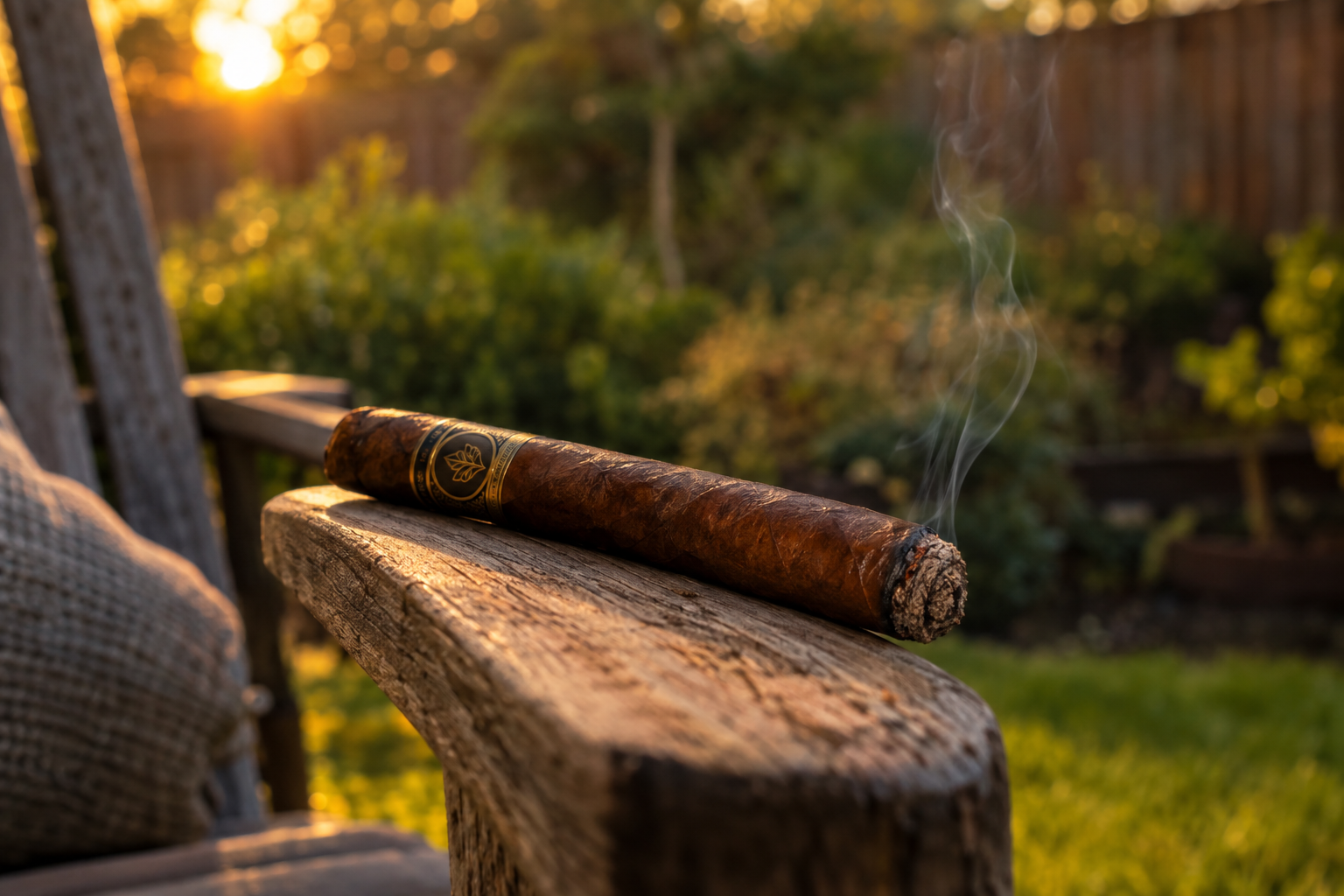
There's a particular kind of quiet that only exists in a backyard at dusk, when the sprinklers have finished their rounds, the neighbor's dog has stopped losing his mind about a squirrel, and the only sound left is the soft crackle of a cigar doing exactly what it was built to do. That quiet is sacred. It's the fifteen minutes a day nobody can schedule a meeting into, nobody can text you about, and nobody can ask you to pick up milk during. It's just you, a lounge chair that's seen better decades, and a stick of tobacco that somebody spent years thinking about before it ever got to your hand.
And that's the part we don't talk about enough. We talk about flavor notes. We talk about box pressure and construction and whether a particular vitola smokes hot in July. But we rarely stop to consider the person — or more accurately, the decades of decisions — behind that quiet backyard moment. That's the master blender. The person whose entire professional existence revolves around making sure your fifteen minutes of peace don't taste like a campfire regret.
So let's actually dig into what these people do, why it matters, and which names deserve a permanent spot in your mental rolodex the next time you're standing in a humidor trying to decide between two boxes that look suspiciously identical.
What a Master Blender Actually Does (Spoiler: It's Not Just Sniffing Leaves)
Somewhere along the way, the term "master blender" got romanticized into this image of a mystical figure who wanders through tobacco fields at golden hour, occasionally touching a leaf and nodding solemnly like he's just received a transmission from the tobacco gods. And look, there might be some of that. But mostly, it's chemistry, agriculture, sensory science, and an absurd amount of record-keeping.
A master blender is responsible for combining different tobacco leaves — grown in different countries, different soils, different microclimates, sometimes different decades — into a single, cohesive smoking experience that tastes the same whether you buy it this year or three years from now. That consistency requirement alone should make you appreciate them more than you currently do, because consistency is the single hardest thing to achieve when your primary raw material is an agricultural product that's subject to weather, soil depletion, and the general unpredictability of anything grown outdoors.
Think about it this way: if you've ever tried to make the same pot of chili twice and had it come out completely different because your tomatoes were a little more acidic this time, multiply that frustration by several thousand and add international shipping logistics, aging requirements that can stretch past a decade, and the fact that your "chili" needs to taste identical to a version made from a harvest gathered before your kids were born. That's the blender's job. Every single day.
The role typically breaks down into three enormous areas of responsibility, and we're going to spend real time on each one, because skimming past them is how people end up thinking blending is just "mixing leaves until it tastes good," which is a little like saying a symphony is just "playing notes until it sounds nice."
Selecting Tobacco Origins: The Original Decision That Shapes Everything
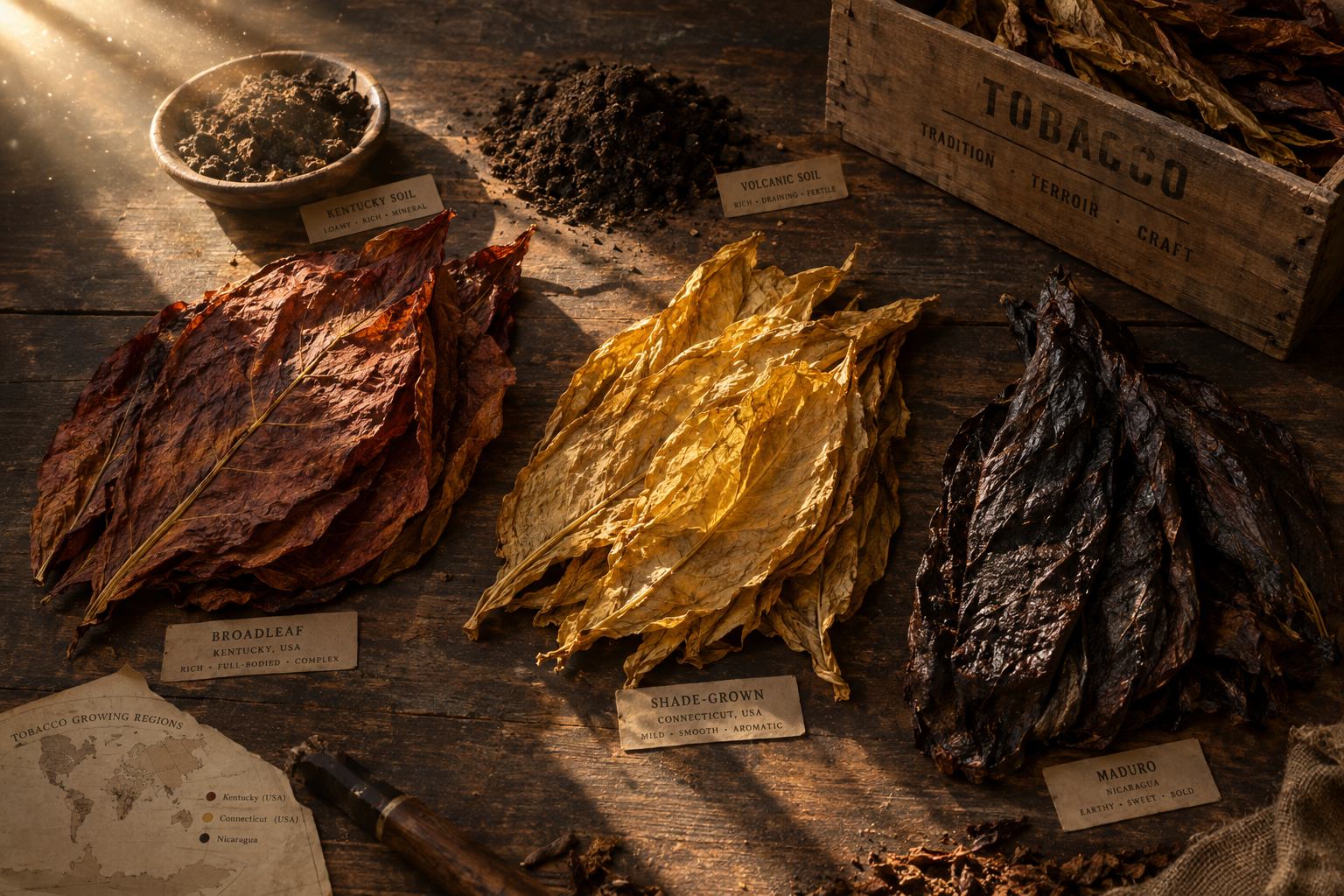
Every blend starts as a pile of leaves from very different corners of the map.
Before a single leaf gets rolled, before anyone even thinks about ring gauge or wrapper shade, the blender has to make a decision that ripples through every single stick that eventually ends up in your hand on a Tuesday evening: where does this tobacco come from?
This isn't a small question. Tobacco is one of those crops that absorbs its environment almost embarrassingly well — like a sponge with opinions. The same seed variety grown in two different valleys can produce leaves with noticeably different character. It's the agricultural equivalent of how your cousin's homemade salsa never tastes the same as yours even though you swear you're using the same recipe, except in this case the "recipe" involves volcanic soil composition, annual rainfall, and how much direct sun a leaf caught during its growing season.
Here's a rundown of the major origin regions and what they typically bring to the blending table, because understanding this is genuinely useful the next time you're reading a box label and trying to figure out why one cigar tastes like a walk through a spice market and another tastes like dessert:
Nicaragua has become something of the powerhouse origin over the last couple of decades, particularly regions like Estelí, Jalapa, and Condega. Estelí tobacco tends to bring bold, peppery, earthy characteristics — the kind of leaf that shows up to the party and immediately starts a conversation whether you invited it to or not. Jalapa, on the other hand, tends to be sweeter and more floral, almost like Estelí's more diplomatic sibling. Condega often lands somewhere in between, offering a kind of balanced backbone that blenders love using as a foundation.
Dominican Republic tobacco, especially from the Cibao Valley, tends to bring a gentler, more refined profile — creamy, nutty, sometimes with a cocoa-like sweetness. This is often the region blenders reach for when they want to smooth out a blend's rougher edges without erasing complexity entirely. It's the diplomatic peacekeeper of tobacco regions.
Honduras, particularly the Jamastran Valley, tends to produce fuller-bodied, earthier leaf with a distinctive minerality. Honduran tobacco has a reputation for bringing a kind of grounded, almost woody heft to a blend — the sort of leaf that makes you feel like you're smoking something with actual weight to it, both literally and metaphorically.
Ecuador deserves special mention here because of its wrapper leaf, particularly Ecuadorian Habano and Connecticut-seed wrappers grown under cloud cover instead of traditional shade tents. The near-constant cloud cover in certain growing regions acts as a natural shade structure, producing wrapper leaves with remarkable elasticity, oil content, and a sweetness that's become highly sought after in premium blends over the past fifteen years or so.
Connecticut (both the shade-grown and broadleaf varieties out of the Connecticut River Valley) remains one of the most recognizable wrapper origins in the industry — shade-grown Connecticut produces that classic golden, silky wrapper associated with milder, creamier smokes, while Connecticut broadleaf, grown in full sun, produces a darker, oilier, more robust leaf used in stronger, sweeter blends like maduros.
Cuba, for all the political and logistical complications surrounding it, remains the origin against which everything else in this industry is still, whether people admit it or not, quietly measured. The Vuelta Abajo region's soil and climate produce a tobacco character that's been the subject of imitation attempts for well over a century, with varying degrees of success.
Brazil, particularly the Mata Fina and Mata Norte regions, brings a distinctive sweetness and dark, almost molasses-like character often used in maduro wrappers and as a flavor-boosting component in blends looking for added richness.
What a master blender does with this geographic buffet is treat each origin almost like a musical instrument in an orchestra. Nicaraguan tobacco might be your brass section — loud, present, impossible to ignore. Dominican tobacco might be your strings — smooth, connective, filling gaps between louder elements. Ecuadorian wrapper might be your woodwinds — delicate, aromatic, adding a top note that ties the whole composition together. The blender's job during origin selection isn't just picking good tobacco. It's picking tobacco that will play well with other tobacco three, five, sometimes ten years down the line, because these leaves often need extensive aging before they're blend-ready, and the blender has to essentially predict the future character of a leaf that hasn't finished maturing yet.
That's the part that should genuinely impress you. It's less like cooking and more like composing a piece of music you won't actually hear performed for a decade, based entirely on your ability to imagine how each instrument will sound once it's fully tuned.
Balance in Blend Design: The Invisible Architecture
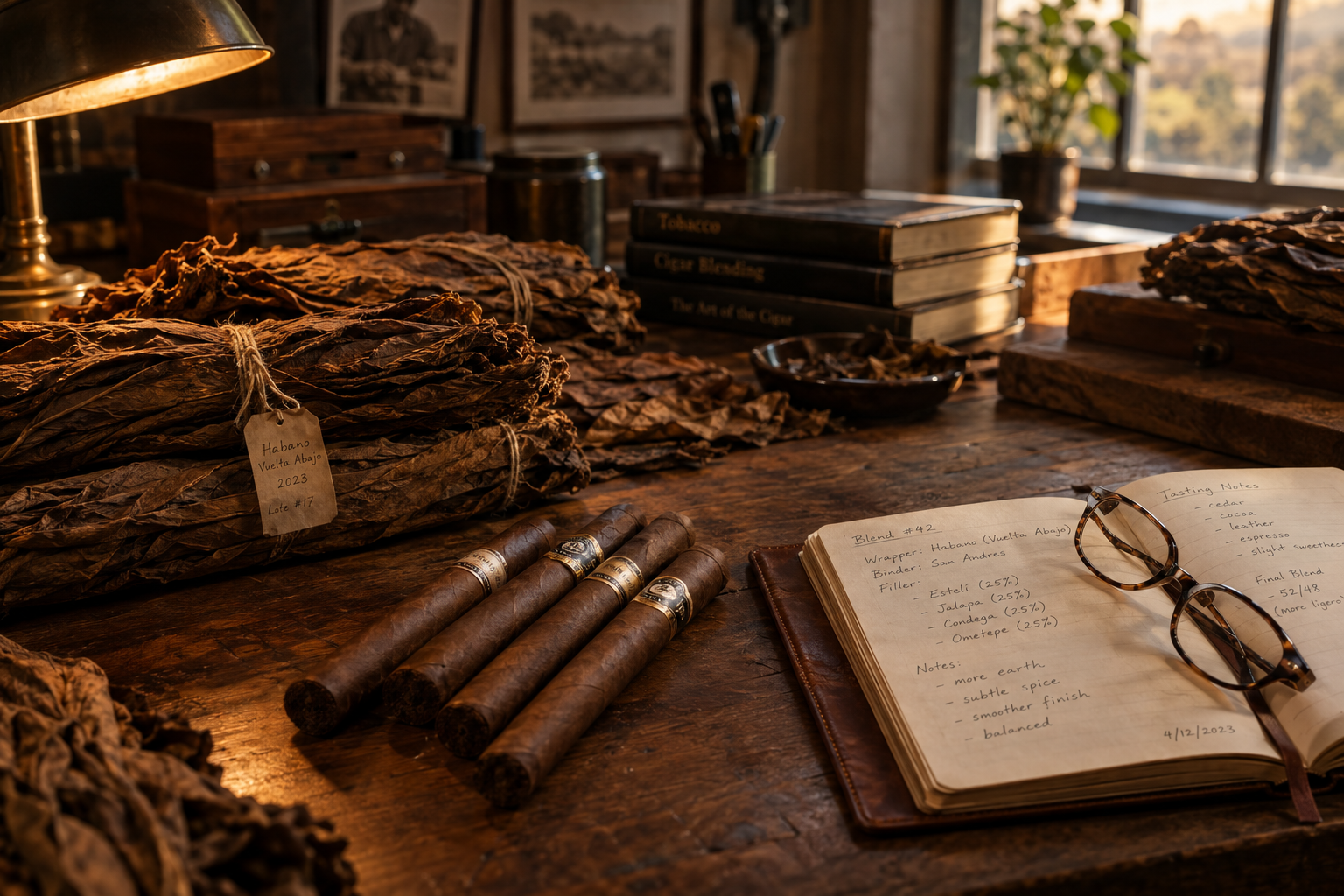
Balance isn't guessed — it's written down, tested, and rewritten again.
Once origins are selected, the real puzzle begins, and this is where the term "master" in "master blender" starts to feel genuinely earned rather than just a fancy job title someone made up to sound impressive on a cigar band.
Balance, in blending terms, refers to how the different components of a cigar — filler, binder, and wrapper — interact to produce a smoking experience that doesn't lurch violently in one direction. A well-balanced cigar doesn't hit you with an overwhelming pepper bomb in the first third only to fizzle into flavorless smoke by the final inch. It doesn't taste like three unrelated cigars stapled together. It moves. It evolves. It tells something resembling a story from light to nub, and every transition feels intentional rather than accidental.
Here's where it gets genuinely technical, and stick with this part because it's the stuff that separates hobbyist blending from professional blending.
Strength versus flavor is probably the most misunderstood balance point among casual smokers. A lot of people conflate strength (the physical, nicotine-driven punch of a cigar) with flavor intensity (how much taste sensation is happening on your palate), and they're not the same axis at all. You can have an intensely flavorful medium-strength cigar, and you can have a flavor-flat cigar that will still put you on your back porch questioning your recent decisions. A skilled blender has to calibrate both independently, which means understanding not just what a leaf tastes like, but its nicotine content, and how that nicotine content shifts depending on the leaf's position on the plant (leaves higher on the tobacco stalk, closer to the sun, are generally stronger and more flavorful than the lower priming leaves).
Filler composition is where a huge amount of balance work actually happens, invisible to the smoker. Multi-origin filler blends might combine four, five, sometimes more different tobaccos, each contributing something specific — one leaf for body, another for sweetness, another purely for combustion and burn quality, another to round out harsh notes from a stronger component. Getting this ratio wrong by even a small percentage can throw off the entire smoking experience, which is why blend prototyping can take years of trial, adjustment, and re-testing before a recipe gets approved for production.
The binder's role often gets overlooked entirely by smokers, but binder leaf does a massive amount of quiet, unglamorous work holding the filler bundle together while contributing its own subtle flavor and combustion properties. A binder that's too thick or oily can mute the filler's flavor; one that's too thin can compromise the burn and construction. It's the stagehand of the cigar world — nobody applauds it, but the whole show falls apart without it.
Wrapper contribution tends to get outsized credit for flavor (people love to say "oh, this is a maduro so it's sweet," as if the wrapper alone determines the entire experience), but a skilled blender knows the wrapper typically contributes somewhere in the range of ten to twenty percent of the overall flavor profile, layered on top of and blended with everything happening underneath it. The wrapper is more like a seasoning crust than the entire dish, even though it gets top billing on the label.
Combustion and burn balance is the part that's easy to forget is even a flavor consideration, but a blend that burns unevenly forces you to relight constantly, and every relight changes the flavor experience because you're reintroducing a burst of harsher combustion notes. A well-balanced blend burns at a steady, even rate, producing what old-timers like to call a firm, tight ash — the kind that holds its shape like it's got somewhere to be, rather than crumbling into your lap the second you look away to answer a question about dinner plans.
Evolution across thirds is the storytelling element. The best blends are built with intentional shifts — maybe starting with brighter, more citrus-forward notes, moving into an earthier, spicier middle section, then finishing with something rounder and sweeter, almost like dessert arriving at the end of a good meal. That evolution doesn't happen by accident. It's engineered by understanding how different leaves combust at different points and adjusting the blend's construction so certain flavor compounds become more prominent as you move toward the foot.
What all of this adds up to is that balance isn't a single decision — it's dozens of interlocking micro-decisions, each one affecting all the others, adjusted and readjusted across countless test blends before something finally gets greenlit for production. It's less like following a recipe and more like tuning an instrument that has forty strings, where adjusting one inevitably throws off three others, and you have to keep going until the whole thing rings true.
Profiles to Research: Building Your Own Mental Catalog
Now here's the practical part — the section where this stops being a lecture about tobacco chemistry and turns into something you can actually use the next time you're standing in front of a humidor trying to justify to yourself why you need yet another box.
Understanding blending philosophy is one thing. Recognizing it in practice is another. So rather than just telling you blenders exist and do important work, let's talk about how to actually build out your own research habits so you start recognizing distinct blending styles the way a wine enthusiast starts recognizing a winemaker's signature across different vintages.
Start by tracking origin combinations, not just brand names. Most casual smokers remember brand names and forget everything else, which is a little like remembering a movie's title but not the director, the cinematographer, or anything about why it actually worked. Next time you smoke something you genuinely love, look up the tobacco composition — the specific countries and regions used in the filler, binder, and wrapper. Write it down somewhere, even if it's just a note on your phone between grocery lists and half-finished thoughts. Over time, patterns emerge. You'll start noticing that you consistently gravitate toward blends featuring Jalapa filler, or that Ecuadorian wrapper shows up in nearly everything you rate highly. That's you reverse-engineering your own palate preferences, which is genuinely useful knowledge.
Research blending philosophy, not just tasting notes. Tasting notes tell you what a cigar tastes like. Blending philosophy tells you why. Some blenders lean heavily into aggressive, high-strength profiles built around bold Nicaraguan ligero leaf stacked for maximum punch. Others favor a more restrained, complexity-over-intensity approach, using aged, mellower tobaccos layered carefully for nuance rather than raw power. Neither approach is objectively better, but knowing which camp a particular blend falls into will save you from a lot of disappointing purchases based on marketing copy alone.
Pay attention to how blends change across a brand's lineup over time. A lot of manufacturers release multiple lines that share a blending philosophy but adjust specific components — swapping wrapper origin, adjusting the ratio of a particular filler leaf, changing binder — to produce variations on a theme. Researching how these variations differ from each other teaches you far more about blend construction than reading a hundred individual reviews ever will, because you're essentially watching the same blender make small, deliberate adjustments and hearing (well, tasting) the results directly.
Look into leaf position terminology and actually learn it. Terms like ligero, seco, and volado refer to a tobacco leaf's position on the plant during growing, and each position produces dramatically different characteristics — ligero leaves, grown at the top of the plant closest to the sun, are the strongest and most flavorful; seco leaves, from the middle, offer more balanced burn and aroma; volado leaves, from the bottom, are mild and primarily used for combustion. Once you understand this vocabulary, cigar descriptions stop being marketing fluff and start being genuinely readable technical documents.
Track fermentation and aging claims critically. Fermentation time, aging duration, and storage conditions all dramatically affect a leaf's final character, and reputable blenders are often (though not always) transparent about these processes. A leaf fermented for an extended period will typically produce a smoother, more mellow result than one rushed through the process, and understanding this helps you evaluate whether a cigar's price point actually reflects genuine production investment or just clever packaging.
Compare small-batch releases against a brand's core lineup. Limited and small-batch releases often represent a blender's more experimental instincts, sometimes using rare aged tobacco reserves or unusual origin combinations that wouldn't be commercially viable for mass production. Researching these releases — even ones you can't easily get your hands on — teaches you a tremendous amount about the outer edges of what blending can accomplish, the way studying a chef's tasting menu teaches you more about their range than their standard dinner menu ever could.
Don't ignore regional blending schools of thought. Certain countries and even specific factories have developed reputations for particular blending approaches passed down through generations — techniques, leaf preferences, and construction methods that get taught within a factory almost like a dialect. Recognizing these regional or factory-specific "accents" in a blend is one of the more advanced skills you can develop, and it comes almost entirely from sustained, deliberate research rather than casual smoking.
Building this kind of mental catalog takes actual time and genuine curiosity, but it transforms cigar smoking from a passive activity into something closer to an ongoing education. And honestly, in a backyard, on a quiet evening, with nothing else demanding your attention, there are worse ways to spend fifteen minutes than mentally cataloging exactly why the cigar in your hand tastes the way it does.
Why This Actually Matters to You, Specifically, Sitting in a Lawn Chair
Here's the thing worth sitting with for a second. That fifteen-to-forty-five minutes you carve out for yourself — away from group chats, away from whatever's happening inside the house, away from every single obligation currently competing for your attention — represents one of the few remaining pockets of genuine, uninterrupted stillness a lot of us get access to on a regular basis. And the entire experience, start to finish, was shaped by decisions made years earlier by someone whose job was to make sure this specific moment of quiet actually delivers something worth savoring.
That's not nothing. That's someone treating your fifteen minutes of peace with the same seriousness a novelist treats a manuscript, or a composer treats a symphony — building something with structure, pacing, and an intended emotional arc, even though you'll never meet them and they'll never know your name.
So the next time you're out there, lawn chair reclined at that particular angle that took years to perfect, cigar going, absolutely no obligations pressing on you for the next little while, it might be worth taking a second to actually think about the blend in your hand. Where did the filler come from? What's the wrapper contributing beyond just looking nice? Is the flavor evolving the way it's supposed to, third by third, or is something off? You don't need a professional palate to start asking these questions. You just need curiosity and a willingness to pay attention to something you might normally just enjoy on autopilot.
Because that's really what researching master blenders and their craft gives you — not just trivia to drop at your next gathering, but a genuinely deeper appreciation for the quiet moment you've built for yourself. And honestly, in a world that seems determined to fill every available second with noise, a hobby that rewards you for slowing down and paying closer attention is worth taking seriously.
Wrapping This Up (Pun Absolutely Intended)
The role of the master blender isn't some romanticized mystery — it's a genuinely demanding, deeply skilled profession that combines agricultural science, sensory expertise, and a kind of long-term patience most modern professions don't require anymore. From selecting tobacco origins that will define a blend's foundational character, to engineering balance across every component of construction, to developing the kind of institutional knowledge that takes decades to build, these are the people quietly responsible for every good backyard evening you've ever had with a cigar in hand.
So do yourself a favor. Start paying attention. Start researching. Start noticing the difference between a Jalapa-forward filler and an Estelí-heavy one. Your quiet time deserves the attention, and honestly, so does the person who spent years making sure it would be worth having.
Let's Keep the Conversation Going
If this got you thinking differently about what's actually in your hand next time you're out back enjoying the quiet, we want to hear about it. Come hang out with us and the rest of the community:
📸 Follow us on Instagram 👍 Join the conversation on Facebook 🎙️ Catch every episode over at Beyond the Humidor 🌐 And check out more great content at Brown's Life
We'll see you out there — lawn chair optional, curiosity required.
