

Cigar Strength: Mild, Medium, Full Explained

Let's get something out of the way immediately: if you've ever stood in a humidor at your local shop, squinting at a box that says "full-bodied" while your buddy hands you something wrapped in a leaf the color of a Werther's Original and says "trust me, it's mild," you already know the strength conversation is a mess. It's the cigar industry's favorite piece of shorthand and simultaneously its most misunderstood marketing term since "small batch" started appearing on everything from bourbon to artisanal ketchup.
Here at Beyond the Humidor, we get asked about cigar strength more than we get asked about literally anything else — more than pairing questions, more than "what's the best cigar under ten bucks," more than "why does Greg insist on smoking a Churchill at 7 a.m." So we're doing what any responsible podcast-turned-media-empire would do: writing 2,500 words about it so we never have to explain it verbally again. You're welcome, Greg.
The Great Strength Myth: It's Not One Thing
Here's the first truth bomb, and it's going to ruin some dinner parties: "strength" isn't a single, measurable quality. It's a blurry umbrella term that the industry uses to describe at least three different things happening at once — nicotine content, flavor intensity, and physical body/sensation. Manufacturers slap "mild," "medium," or "full" on a box like it's a scientifically calibrated rating, when in reality it's closer to a vibe. A very confidently marketed vibe.
This is exactly why you can hand two experienced smokers the same cigar and get two wildly different answers. One guy says "that's a solid medium," the other says "that thing about put me on the floor." Neither of them is wrong. They're just measuring different things, on different days, with different bodies, different lungs, and — let's be honest — different amounts of sleep and coffee in their system.
So before we go any further, let's break "strength" into its actual components, because once you separate them, the whole conversation gets a lot less confusing and a lot more useful.
Component One: Flavor Intensity (The Part Everyone Confuses With Strength)
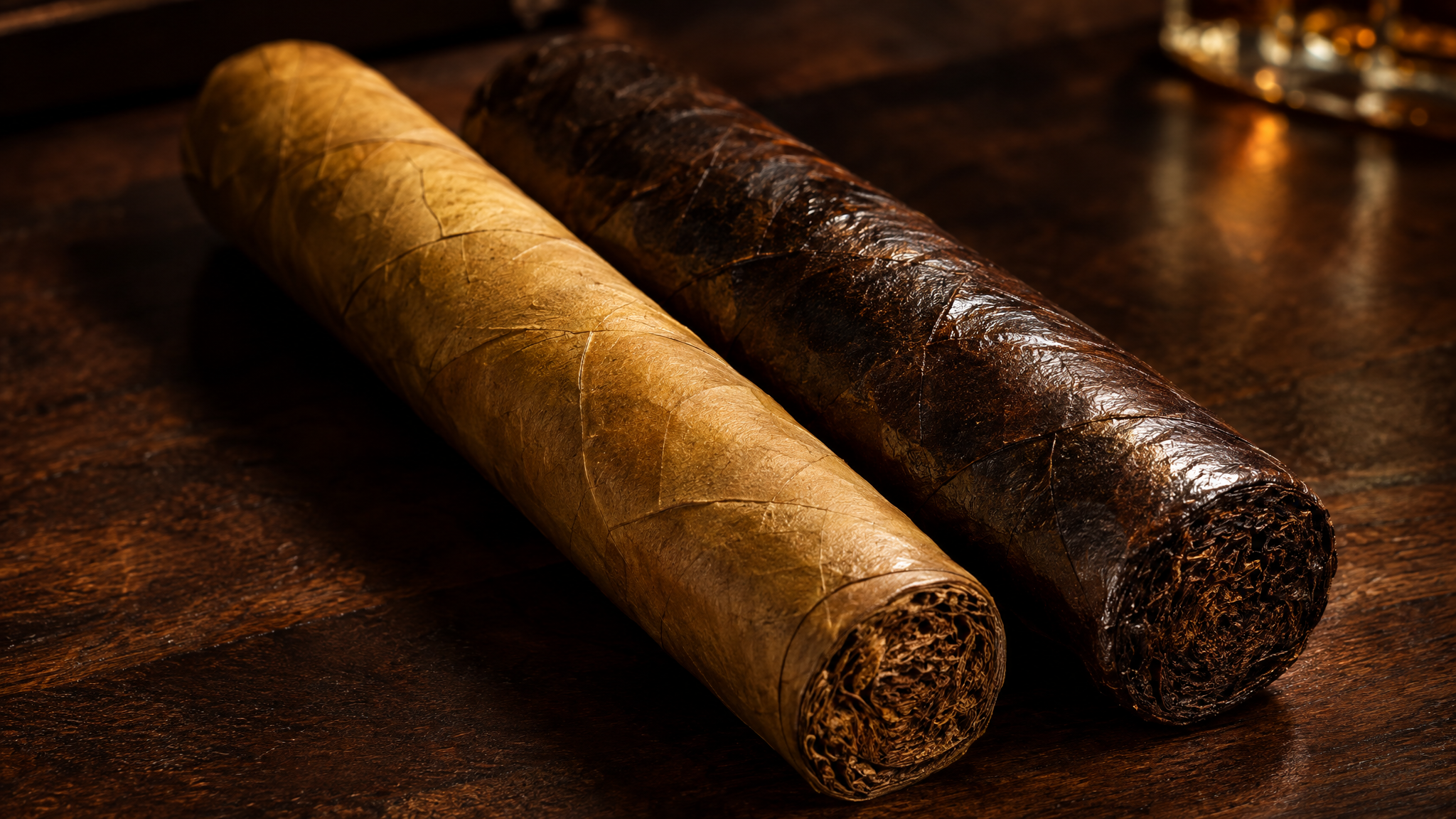
Flavor intensity is about how loud the cigar tastes — not how hard it hits. A cigar can be bursting with bold, rich, in-your-face flavor — espresso, dark chocolate, black pepper, leather — and still be relatively gentle on the nicotine front. Conversely, you can smoke something fairly one-note and mellow-tasting that will still knock you into next week because of what's happening at the nicotine level.
Think of it like coffee. A dark roast espresso and a "extra bold" drip coffee can both taste intense, but their caffeine content isn't necessarily correlated with how dark or bitter they taste. Cigars work the same way. The wrapper leaf, in particular, gets an unfair amount of blame (or credit) here. People see a maduro wrapper — dark, oily, cocoa-colored — and assume "full strength, buckle up." In reality, that dark color usually comes from extra fermentation and aging, which mellows the leaf and often produces a sweeter, richer flavor profile without necessarily cranking the nicotine dial. Meanwhile, a lighter Connecticut shade wrapper can wrap around a filler blend that will absolutely rearrange your understanding of the afternoon.
Flavor complexity is also part of this bucket. A cigar can shift through three or four distinct flavor notes across its length — a peppery start, a creamy midpoint, a sweet, cedary finish — and that complexity gets mistaken for "strength" simply because it's a lot to process. Your palate is working overtime, so your brain files the whole experience under "intense," even though your body feels perfectly fine.
The takeaway: flavor intensity is a taste and aroma experience. It happens on your tongue, your palate, and in your nose. It has almost nothing to do with what's happening to your bloodstream, and that distinction is the single most important thing in this entire article. Write it on a sticky note. Put it in your humidor.
Component Two: Nicotine (The Part That Actually Determines Whether You're Fine or Face-Down)
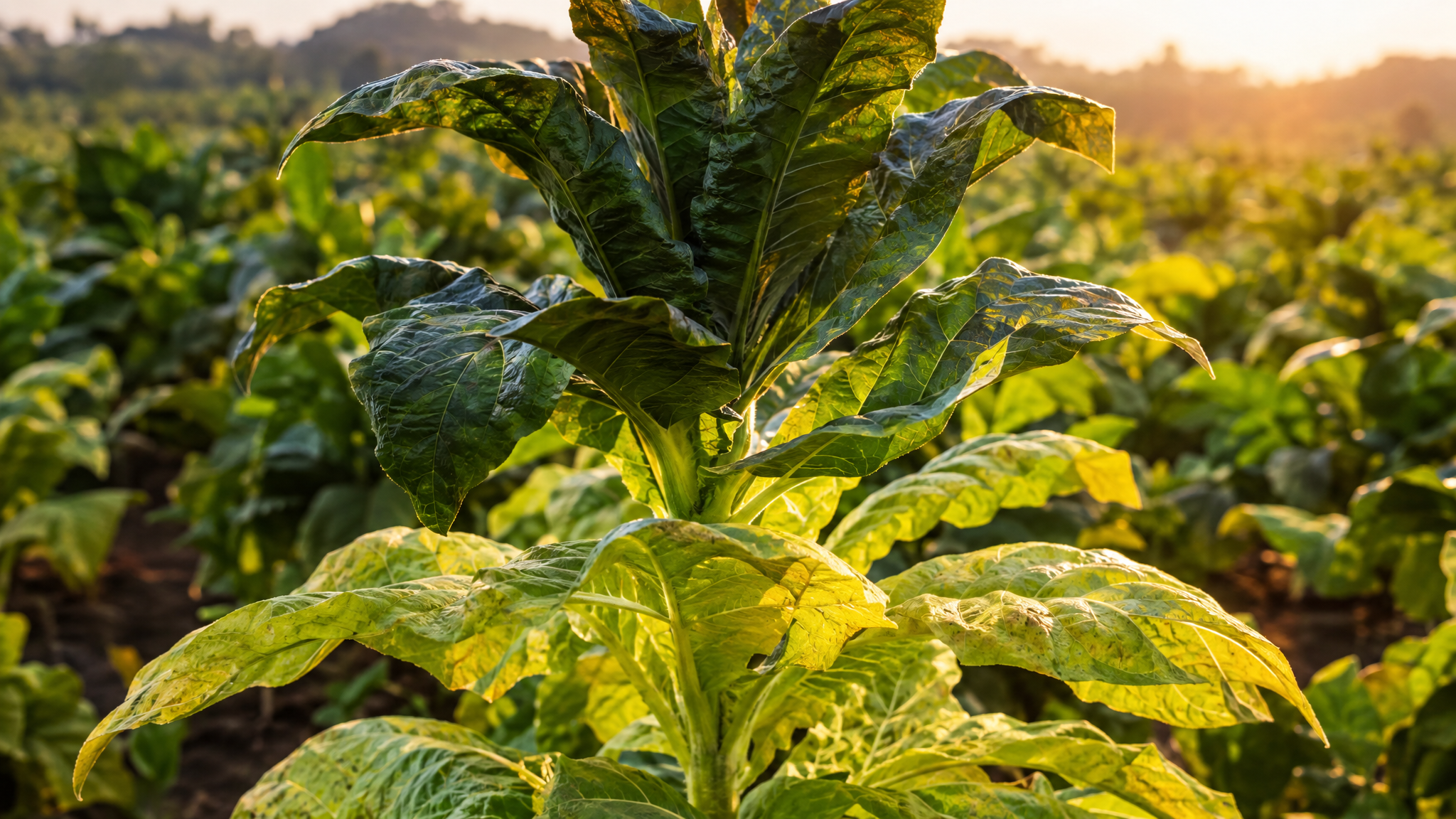
This is the part that matters when someone says "that cigar kicked my butt." Nicotine content is what causes the lightheadedness, the sweats, the slight nausea, the sudden and urgent need to lie down on whatever surface is nearest — car hood, curb, that one guy's ottoman that everyone now avoids sitting on at cigar nights.
Nicotine concentration in a cigar depends heavily on a few real, physical factors:
Primings (leaf position on the plant): Tobacco leaves grow in stalk positions from bottom to top, generally categorized as volado (lowest), seco (middle-lower), viso (middle-upper), and ligero (top). The higher up the stalk, the more direct sun exposure the leaf gets, which thickens the leaf and increases oil and nicotine content. Ligero leaves are the nicotine powerhouses of the plant — they're often used sparingly, tucked into the filler blend specifically to add strength and punch. A cigar loaded with ligero in the filler is going to hit harder regardless of what the wrapper looks like.
Growing region and soil: Different tobacco-growing regions — Nicaragua's Estelí and Jalapa valleys, the Dominican Republic's Cibao Valley, Honduras's Jamastran Valley, Connecticut's broadleaf country — produce tobacco with different natural nicotine profiles due to soil composition, climate, and rainfall. Nicaraguan tobacco, especially from Estelí, has a well-earned reputation for packing more of a punch than, say, a delicate Dominican leaf grown for finesse rather than force.
Fermentation and aging: This is the mellowing agent. Extended fermentation breaks down ammonia compounds and some of the harsher alkaloids in the leaf, which can soften both flavor harshness and some of that raw nicotine bite over time. This is part of why a well-aged full-flavored cigar can still be more approachable than a younger, less-fermented "medium" cigar that hasn't had time to mellow out.
Blend construction: Most premium cigars are blends of multiple tobacco types (and often multiple countries of origin) layered together — filler, binder, and wrapper each contributing their own characteristics. A blender can build a cigar that tastes rich and full-flavored while keeping the nicotine load moderate, specifically by choosing leaf positions and fermentation levels that favor flavor complexity over raw punch. This is a skill, and the good blenders out there — the Rocky Patels of the world — have spent decades dialing this in. (Yes, we're name-dropping. We've got his number. It's on the fridge. Deal with it.)
The takeaway: nicotine strength is a physiological experience, not a flavor experience. It's the difference between "this tastes bold" and "I need to sit down." These are not the same axis, and conflating them is where 90% of cigar strength confusion originates.
Component Three: Body (The Weird Middle Category Nobody Explains Well)

"Body" is the term the industry uses to describe the overall weight, richness, and mouthfeel of the smoke — how it physically sits in your mouth and throat. Think of the difference between skim milk and heavy cream. Both are milk. One coats your mouth and feels substantial; the other doesn't. Body is somewhat correlated with flavor intensity and somewhat correlated with nicotine, but it's really its own sensory category — a combination of oils, smoke density, and construction.
A full-bodied cigar feels heavier in the mouth, often has a denser smoke output, and tends to linger longer on the palate after each draw. This is why people sometimes describe a full-bodied smoke as "chewy" — an admittedly bizarre word choice for something you're not eating, but cigar guys have never met a piece of jargon they didn't fall in love with immediately.
Body is influenced by construction quality, filler density, leaf oils, and even humidification level. A cigar that's slightly under-humidified can smoke "thin" and lose body characteristics regardless of the blend's intended profile — which is a good reminder that your storage habits are quietly part of the strength conversation too. If your humidor is running dry, that "full-bodied" stick you bought might be smoking like a shadow of itself, and you'll blame the blender instead of your hygrometer.
Putting It All Together: The Mild/Medium/Full Spectrum, Properly Defined
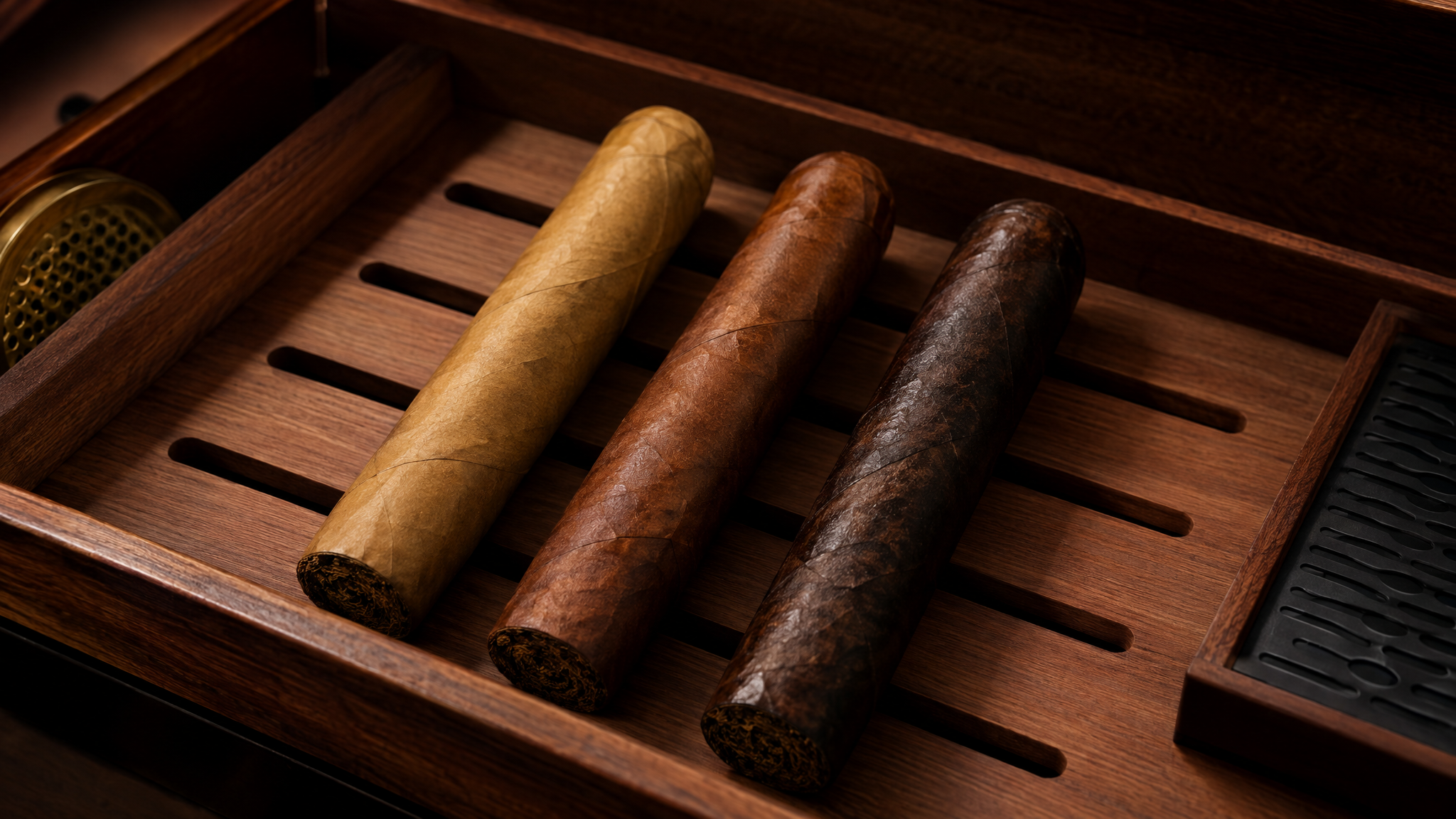
Now that we've separated flavor, nicotine, and body, here's how the classic three-tier system actually functions when it's working correctly:
Mild: Generally lower nicotine content, lighter body, and more delicate, nuanced flavors — think cream, toast, hay, light wood, subtle sweetness. Often built with Connecticut or Ecuadorian Connecticut wrappers and higher proportions of seco and viso leaf in the filler. Mild doesn't mean flavorless — it means the flavors are quieter and require a bit more attention to catch. This is the category most beginners should start in, not because "real smokers" graduate out of it, but because it lets you actually taste what's happening without your nervous system screaming over the top of it.
Medium: The largest and most crowded category, and honestly the most poorly defined, because it's everything that isn't clearly mild or clearly full. Medium-bodied cigars balance moderate nicotine with more pronounced flavor complexity — coffee, leather, subtle pepper, some sweetness. This is where most everyday, all-purpose cigars live, and it's where a lot of experienced smokers spend the bulk of their rotation because it offers flavor payoff without a nicotine tax.
Full: Higher nicotine content (usually from more ligero in the blend), bold, often peppery or earthy flavors, and a heavier body/mouthfeel. This is the category that gets the reputation — rightly and wrongly. Rightly, because yes, a poorly-paced full-bodied cigar smoked too fast on an empty stomach will absolutely ruin your afternoon. Wrongly, because plenty of full-bodied cigars are exceptionally smooth and well-balanced; "full" doesn't mean "harsh," it means "substantial." A well-aged Nicaraguan puro can be full-bodied and full-flavored while still being remarkably refined — smooth, layered, and complex rather than a blunt instrument.
Where People Get It Wrong (aka the Misinterpretation Hall of Fame)
Let's run through the greatest hits of strength confusion, because we've heard every single one of these at cigar nights, trade shows, and in our own inboxes from listeners:
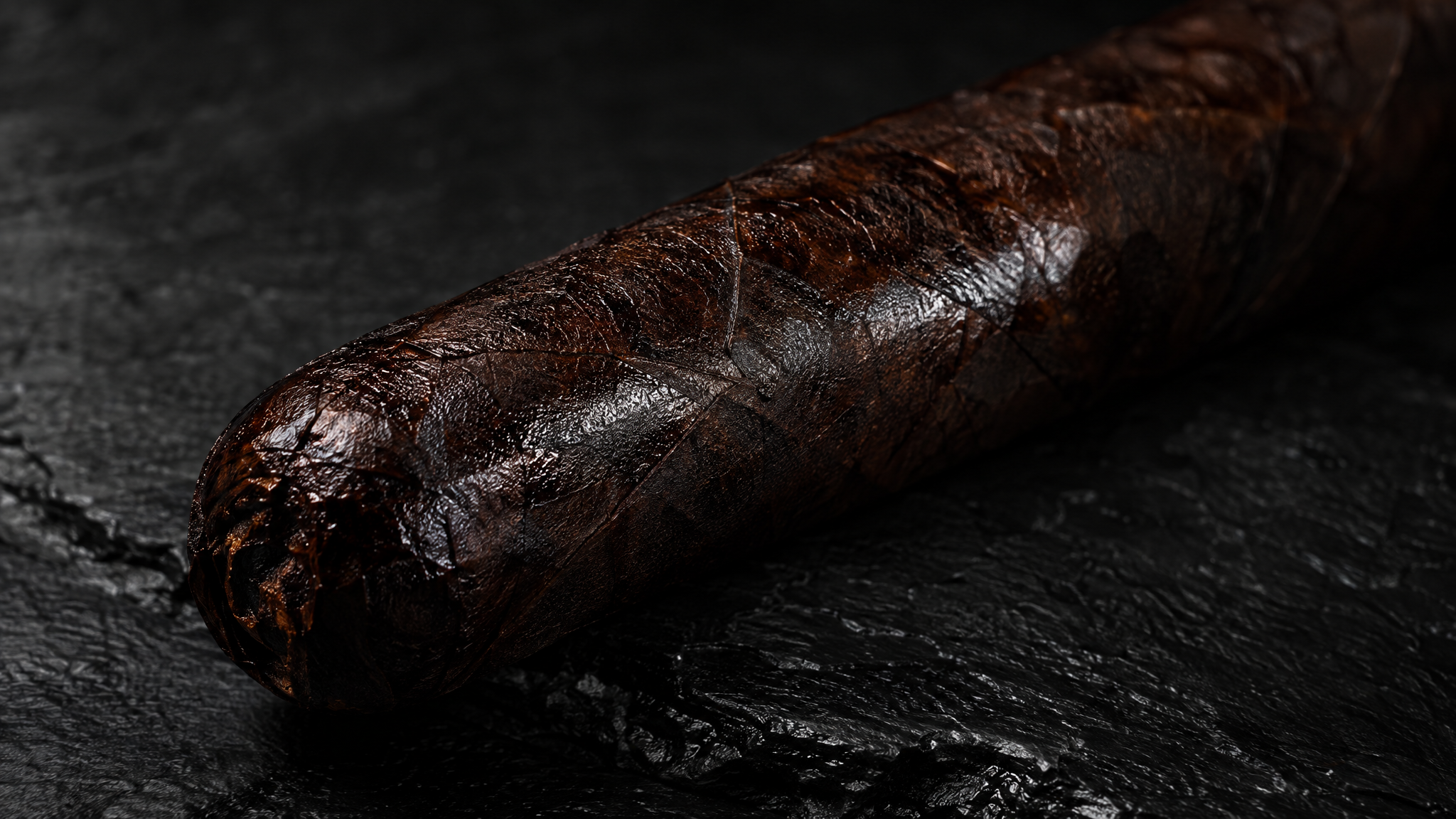
"Dark wrapper = strong cigar." Wrong more often than it's right. Wrapper color tells you almost nothing definitive about nicotine content. It's a flavor and visual indicator, occasionally a body indicator, but not a reliable nicotine predictor. A maduro can be gentle. A Connecticut can, in rare blends, still carry some punch depending on the filler. Judge the blend, not the wrapper.
"I got a headache, so this cigar is 'full strength.'" A headache or lightheadedness after a cigar is very often about pace and consumption, not just the blend itself. Smoking too fast, on an empty stomach, dehydrated, or back-to-back without breaks will produce nicotine effects on almost any cigar, mild included. Conversely, a genuinely full-bodied cigar smoked slowly, with food and water nearby, might treat you just fine. Don't blame the stick for your Tuesday-afternoon impatience.
"Strength is the same for everyone." Absolutely not. Nicotine tolerance varies wildly by individual — body weight, whether you've eaten, hydration, whether you smoke cigarettes or vape (which changes baseline tolerance), sleep, caffeine intake, and simple day-to-day physiology all shift how a cigar hits you. The same cigar that's a Tuesday-morning cruiser for one guy is a full-on incident for someone else. This is precisely why cigar strength ratings should always be read as general guidance, not gospel.
"Full-bodied means harsh or bad for beginners." This one does real damage, because it scares newer smokers away from genuinely excellent cigars simply because of a label. Full-bodied cigars, when well-constructed and properly aged, can be some of the smoothest, most rewarding smokes out there. "Full" describes weight and intensity, not quality or harshness.
"Medium is just 'safe' and boring." Also wrong — and a little insulting to an entire category of exceptional cigars. Medium-bodied blends are often where master blenders show off the most nuance, because they're threading a needle between flavor complexity and approachability. Don't sleep on medium. Some of the most decorated, awarded cigars in the industry live comfortably in that tier.
"The rating on the box is an exact science." It's a guideline set by the manufacturer, sometimes based on formal panel tasting, sometimes based on marketing instinct. It is not FDA-regulated, standardized, or independently verified in any consistent way across brands. Treat the label the way you'd treat a movie's star rating — a helpful hint from someone with an opinion, not a scientific measurement.
How to Actually Navigate Strength Like You Know What You're Doing

If you want a practical framework instead of just vibes, here's what we tell listeners who call in confused:
Separate the three axes in your head every time you evaluate a cigar — flavor intensity, nicotine, and body. Ask yourself which one you're actually reacting to. "That was intense" could mean any of the three, and knowing which one helps you pick your next cigar intelligently instead of by superstition.
Read reviews from multiple sources, not just the box. Sites, forums, and yes, podcasts (ahem) that actually break down nicotine, flavor, and body separately will serve you far better than a single manufacturer label.
Pace yourself and know your own body. Eat something beforehand, stay hydrated, and don't rush a full-bodied cigar the way you'd rush a mild one after dinner. Respect the blend.
Build a rotation across the spectrum. Don't pigeonhole yourself into "I only smoke full" or "mild is for beginners." Your palate, your mood, the time of day, and the occasion all matter. A mild Connecticut in the morning with coffee, a medium after lunch, a full-bodied Nicaraguan puro after a big dinner with a proper rest of bourbon — that's not indecision, that's expertise.
Talk to your local tobacconist. A good shop owner — the kind who actually knows their inventory rather than just reading you the box copy — can steer you toward blends that match what you're actually looking for, rather than what the label claims.
The Bottom Line
"Mild, medium, and full" is a useful shorthand, but it's shorthand for a genuinely complicated set of variables — leaf position, growing region, fermentation, blend construction, wrapper characteristics, and yes, your own personal biology on any given day. The industry hasn't done itself any favors by collapsing all of that into a single word on a box label, and frankly, neither have the countless keyboard warriors on cigar forums who treat their personal tolerance as universal law.
The next time someone hands you a cigar and confidently declares it "mild" or warns you it's "full strength," take it as a starting point, not a verdict. Pay attention to what's actually happening — is it your palate lighting up, or is it your nervous system waving a white flag? Once you can tell the difference, you've graduated from someone who reads cigar labels to someone who actually understands tobacco. And really, isn't that the whole point of this ridiculous, wonderful, slightly nicotine-stained hobby we've all fallen into?
Light one up, take your time, and stop blaming the wrapper for your poor pacing decisions. We'll see you at the next event — Rocky says hi.
Got a strength horror story, a blend that surprised you, or a hot take you want debated on air? Send it our way — Beyond the Humidor thrives on listener mail, and yes, we will absolutely read your embarrassing "I underestimated a maduro" story out loud.
